

Articles & Resources
Explore articles and resources designed to bring encouragement, insight, and hope for every step of the recovery journey.
I’m Married to an Alcoholic: What Do I Do?


I’m Married to an Alcoholic: What Do I Do?
If you’re married to an alcoholic, there’s a good chance you’ve spent a lot of time wondering what you’re supposed to do.
Do you confront them again? Give them another chance? Stop bringing it up? Pour the alcohol out? Call someone? Leave? Stay? Wait until they’re ready?
When you love someone struggling with alcohol, it’s easy for their addiction to slowly become the center of your life, too. You start paying attention to how much they’ve had to drink, what mood they’re in, whether they made it home, what they told the kids, how much money they spent, or whether this promise to quit will be different from the last one. And you wonder if anything you’re doing is helping the situation.
So, what do you actually do when your husband or wife is an alcoholic?
Here are some practical places to start.
Step 1: Get Honest About Their Drinking
You don’t have to wait for your spouse to lose everything before admitting alcohol has become a problem.
Sometimes alcoholism is obvious. Other times, especially from inside a marriage, it’s surprisingly easy to explain away. They still go to work. They don’t drink every day. They only get really drunk on the weekends. They’ve never been arrested. They can stop for a few days when they really want to.
But a better question than “Are they bad enough to be an alcoholic?” is this: What is alcohol doing to our life?
Has alcohol damaged trust between you? Is it affecting your finances, parenting, intimacy, responsibilities, or communication? Are there promises to stop followed by the same behavior? Have you started changing what you say or do to avoid setting them off? Are your children learning to read the room based on whether Mom or Dad has been drinking?
Step 2: Decide What You Will and Will Not Live With
Once you acknowledge what is happening, it’s time to think about boundaries. It’s important to keep in mind that a boundary is not another attempt to control your spouse. It is a decision about what you will do when a certain behavior occurs.
“Stop drinking or else” tries to control someone else's decision.
“I will not allow you to drive our children after you’ve been drinking” establishes what you will do to protect your children.
“I’m not going to lie to your employer or family to cover up what happened” is a boundary.
"If I think that you have brought drugs, alcohol, or drug paraphernalia into the house, I will ask you to leave” is a boundary.
“I will not participate in conversations when I feel that you are intoxicated” is a boundary.
Boundary Tip: If you set a boundary, you better be prepared to follow through with it. If you don’t, then it’s not a boundary.
Step 3: Stop Doing for Them What They Need to Do for Themselves
This can be one of the hardest changes to make because many of the things we call “enabling” begin as acts of love or self-preservation.
You don’t want your spouse to lose their job, so you make the excuse for why they’re late again. You don’t want your children to know what happened, so you clean up the mess before they wake up. You don’t want your extended family to think badly of them, so you come up with another explanation for why they didn't show up. You don’t trust them to go get groceries, so you do it for them. And on and on and on it goes.
You are trying to hold your family together. And while there is nothing inherently wrong with that, there comes a point when constantly protecting someone from the consequences of their drinking protects the addiction, too.
That doesn't mean you should be cruel or intentionally make your spouse's life harder. You don't have to make their consequences worse. But you don't have to keep making them disappear, either. They are responsible for the consequences of their actions, and it is not your job to continually protect them.
Step 4: Get Support for Yourself
Loving someone struggling with alcohol can make you question what’s normal, what’s your responsibility, and whether the decisions you’re making are actually helping. It’s hard to see clearly when you’re in the middle of it every day.
Finding Hope is a free support group created specifically for people who love someone struggling with addiction. It gives you a place to be honest about what you’re experiencing alongside people who understand the fear, frustration, confusion, and exhaustion that can come with loving someone in addiction.
Finding Hope can also help you learn how to set healthy boundaries, stop enabling destructive behavior, take care of yourself, and understand what is — and is not — your responsibility.
You don’t have to wait for them to get help before you get help.
Find a Finding Hope meeting near you today.
Step 5: Encourage Recovery
You can’t make your spouse get sober, but you can make it easier for them to take the next step when they’re willing.
Talk to them when they’re sober, if possible. Tell them clearly that you believe they need help, and come to the conversation with an actual option — not just “you need to do something.”
That might mean calling The Healing Center together.
The Healing Center is a 45-day immersive experience that offers a trauma-informed, Christ-centered approach to radical life transformation for alcoholics.
If they’re willing, don’t wait for the perfect time. Make the call. Ask questions. Find out what getting help could look like.
And if they say no, remember: Their decision not to get help doesn’t mean you have to go back on the boundaries you’ve set.
What Families Should Know About The Healing Center
If you're considering The Healing Center for someone you love, it's important to understand that we aren't trying to replace detox, medical care, or professional addiction treatment when those services are needed.
Every situation is different, and The Healing Center won't necessarily be the right first step for every person struggling with addiction. But if your loved one is ready to continue working on his recovery and would benefit from a faith-based community, The Healing Center is worth considering.
You don't have to know exactly what kind of help he needs before you contact us. That's one of the reasons we're here. We can talk with you about what's going on, answer questions about The Healing Center, and help you better understand whether our program makes sense for where your loved one is right now.
Contact The Healing Center today to learn more about our faith-based recovery community and what life at The Healing Center looks like.
The Mental Health Crisis Facing Men Today

The Mental Health Crisis Facing Men Today
Men are facing a serious mental health crisis in the United States, and one of the greatest concerns is not simply how many men are struggling, but how many are struggling without receiving help.
Only about 41.6% of men with a mental illness receive mental health treatment, according to the Anxiety and Depression Association of America. Research from the Priory Group found that approximately 40% of men surveyed had never spoken to anyone about their mental health. The same research identified work-related pressure (32%), financial pressure (31%), and health concerns (23%) as some of the leading issues negatively affecting men's mental health.
In short, men are struggling, but many are not getting the help they need.
What Do Mental Health Struggles Look Like for Men?
Part of the problem is that mental health struggles in men are not always easy to recognize. When we think about depression, we tend to think about sadness, crying, hopelessness, or someone who has lost the motivation to get out of bed. Those can absolutely be signs of depression, but they are not the only signs. A man can be depressed and still go to work every morning, take care of his family, spend time with friends, and appear to be functioning normally.
Sometimes depression, anxiety, and emotional distress show up as anger or irritability. A man may have a shorter temper than usual, become increasingly frustrated with the people around him, or find himself getting angry over things that normally would not bother him. He may start pulling away and isolating from his spouse, friends, or family without fully understanding why. He may have trouble sleeping, lose interest in things he used to enjoy, struggle to concentrate, or feel exhausted regardless of how much he rests.
Other times, the changes are found in the ways he copes. He may start working longer hours because staying busy keeps his mind occupied or because he feels like he is behind. He may spend more time gaming, scrolling, gambling, exercising, or doing anything else that provides an escape. He may take more risks than he normally would. And for some men, alcohol or drugs become an increasingly important part of getting through the day.
Please note that none of these behaviors automatically means someone has a mental health condition.
Why Don't Men Talk About Their Mental Health?
There is no single reason men avoid talking about mental health, and it would be unfair to assume that every man has the same experience. Still, many men grow up receiving very similar messages about what it means to be a man: Handle your problems. Take care of your family. Don't complain. Keep going.
There is value in resilience and personal responsibility, but those ideas can become harmful when a man begins to believe that needing help means he has somehow failed. If you have spent most of your life believing you should be able to handle whatever comes your way, admitting that you are overwhelmed, depressed, anxious, lonely, or afraid can be incredibly difficult.
Some men also simply do not know how to talk about what they are experiencing. They may know they haven't felt like themselves for months but have a hard time putting that feeling into words.
Others worry about how people will respond. They don't want their spouse, parents, or kids to worry about them, don't want friends to look at them differently, or don't believe their problems are serious enough to bring to a therapist or doctor.
That can lead to years of minimizing what is happening. For instance, common cover-ups include: He needs a vacation. Work will calm down soon. Money won't always be this tight. He'll feel better once he gets some sleep. He just needs to get through this week.
Sometimes things do get better. Sometimes they don't.
How Work and Financial Stress Affect Men’s Mental Health
The fact that work and financial stress rank so highly among the concerns affecting men's mental health should come as no surprise. For many men, work and money are connected to much more than a paycheck. They are tied to identity, independence, security, achievement, and the ability to take care of the people they love.
When those areas of life become unstable, mental health often does as well. A job loss, financial setback, overwhelming debt, or simply struggling to keep up with everyday expenses can create significant anxiety. Even someone who appears financially stable may feel enormous pressure to maintain what he has built or continue meeting the expectations placed on him.
It’s important to note that stress rarely stays contained to one area of life, which is why mental health can be severely impacted by it. Financial stress can make it difficult to sleep. Poor sleep can make someone more irritable and less patient. That irritability can create problems in a marriage or family. Problems at home make it harder to concentrate at work, which creates even more stress. Before long, what started as one problem has found its way into nearly every part of someone's life.
Without healthy ways to manage that pressure, it is easy and common to start looking for something that provides temporary relief (drugs, alcohol, sex, gambling, etc.).
Getting Help Doesn’t Have to Be a Last Resort
There is often an unspoken threshold men feel they have to reach before their struggles are considered “serious enough.” If they can still get up, go to work, pay the bills, take care of their family, and make it through the day, they assume they should be able to keep handling it.
But mental health is not measured by how well someone can keep up appearances.
You can be functioning and still be struggling. You can be successful at work and miserable at home. You can have people who love you and still feel completely alone. You can laugh, make plans, show up for your kids, and handle your responsibilities while knowing internally that something is not right.
Getting help does not have to come after a breakdown. It does not have to come after months or years of trying to push through depression, anxiety, anger, exhaustion, or overwhelming stress. And it certainly should not take a suicide attempt, overdose, divorce, job loss, or another major crisis before someone finally feels justified in saying, I need help.
In fact, the best time to address a mental health concern is before it reaches that point. You do not have to wait until you have lost everything to decide you want something different.
Find Help at The Healing Center
Offering a 45-day, trauma-informed, Christ-centered immersive experience, The Healing Center helps men build intimate relationships with Christ, reclaim their lives, and create a life so good they never want to escape from it again.
It’s not addiction treatment. It’s not rehab. It’s not traditional counseling. It’s Recovery Done Differently.
Contact The Healing Center today to learn more about our trauma-informed program, ask questions, and find out if our recovery campus is the right next step for you or someone you love. We're here to help you heal your whole self — mind, body, and soul.
Who The Healing Center Serves
The Healing Center provides recovery housing and recovery support for men in a drug, alcohol, and gambling-free environment with clear sexual integrity and accountability expectations. We focus on accountability, peer support, life skills, wellness, nutrition, fitness, spiritual growth, trauma-informed support, and community.
We are not a treatment center and do not provide detox, therapy, counseling, IOP, outpatient treatment, medical care, medication management, gambling treatment, trauma therapy, or clinical substance use disorder treatment.
Women’s Lodge planned for 2027.
How to Heal Your Nervous System After Addiction

How to Heal Your Nervous System After Addiction
When someone you love gets sober, it is natural to expect things to start getting better. The substance is gone, they are making different choices, and life may finally have some of the stability you have both been hoping for. But you may also notice that they still seem restless when nothing is wrong. They may have trouble sleeping, overthink small interactions, become overwhelmed by changes in plans, or react strongly to something that does not seem like a big deal to you.
There is a reason for that.
Addiction doesn’t only affect a person’s decisions or behavior. It can change the way the brain and body respond to stress, pleasure, discomfort, and perceived danger. If substances were part of your loved one’s life for a long time, their nervous system became accustomed to having them involved in the process of regulating how they felt. Once those substances are removed, the body has to relearn how to cope.
This article will look at what it actually takes for the nervous system to heal after addiction, from creating consistency and learning how to tolerate discomfort to managing stress in healthier ways and building safe relationships. We’ll also talk about what you can do as a family member to support that process without trying to manage your loved one’s recovery for them.
Want to learn more about how nervous system dysregulation contributes to addiction? Click here!
Create Consistency in Addiction Recovery
One of the most important things a nervous system needs after addiction is consistency. Active addiction is often unpredictable since much of the day can revolve around getting a substance, using it, recovering from it, or dealing with the consequences. Even after that chaos has ended, the nervous system may continue operating as though that cycle is still happening.
To help rewire the nervous system, consistency is necessary. The brain needs repeated experiences that show it life is no longer as unpredictable as it once was. A regular sleep schedule can help the body begin recognizing when it is time to rest. Eating consistently helps prevent physical stress from being added to emotional stress. Having a routine gives the day some structure, which means there are fewer unknowns for the nervous system to constantly respond to.
As a family member, you can support this by being consistent in the ways that are actually yours to control. If you set a boundary, keep it. If you make a commitment, follow through. Try not to change expectations based on whether your loved one is having a good day or a difficult one. Consistency in your relationship can provide stability without making you responsible for creating stability in every area of their life.
Learn to Tolerate Discomfort
In recovery, your loved one has to develop the ability to experience uncomfortable emotions without immediately escaping them. This can be extremely difficult, and as emotions rise, situations will likely escalate before a solution is found.
For years, substances may have provided a quick way to shut down whatever they were feeling. Without that option, your loved one is now learning how to stay present through frustration, anxiety, disappointment, and conflict long enough to work through what is actually happening. In the beginning, they may not have the skills to do this well. A relatively small problem can become a much bigger emotional reaction because their nervous system is responding to the discomfort before they have had time to process it.
While they are rewiring their brains, the goal is not to avoid difficult emotions or make them disappear as quickly as possible. It is to recognize what is happening, allow the initial intensity to come down, and then decide how to respond.
As a family member, you may feel pressure to calm the situation or find a solution for them, especially if you spent years trying to prevent things from getting worse. But stepping in every time can prevent your loved one from developing the ability to work through discomfort themselves. You can remain supportive without taking over. Sometimes the most helpful thing you can do is give them space to settle, keep your own boundaries in place, and return to the conversation when both of you are able to approach it more calmly and clearly.
Find Healthier Ways to Manage Stress
Learning to tolerate discomfort does not mean your loved one should simply push through every difficult emotion on their own. They also need to develop healthier ways to manage stress when they feel themselves becoming overwhelmed.
This will look different for everyone. Your loved one may find that physical activity helps when they feel restless or agitated, while talking with someone helps when they are stuck in their own thoughts. Counseling can help them understand why certain situations create such a strong response and give them an opportunity to practice responding differently. The important thing is that they begin building ways to cope that do not depend on avoiding or numbing what they are feeling.
It is also helpful to recognize stress before it reaches a breaking point. Your loved one may begin sleeping poorly before they become noticeably overwhelmed, or you may notice that they start withdrawing when something is bothering them. As they become more aware of their own patterns, they can learn to respond earlier instead of waiting until their emotions feel unmanageable.
As a family member, you can encourage the things that are helping without making them your responsibility. You might notice that your loved one seems better after going to a meeting or talking with their counselor, but it is still their job to make those choices. The goal is for them to become increasingly aware of what their nervous system needs and learn how to respond to those needs on their own.
Build Safe Relationships
Even after getting sober, your loved one may still expect conversations to become arguments or assume that one mistake will undo all of the progress they have made. It will take time and repetition for their expectations to change.
But a safe relationship does not mean there is never conflict. In fact, learning how to have conflict without everything falling apart is an important part of recovery. Your loved one needs opportunities to experience disagreement and discover that the relationship can survive it. They need to be able to tell the truth about what they are struggling with, and they need to be able to hear what you truly think as well.
Each time a difficult conversation is handled with honesty and consistency, their nervous system has another opportunity to learn that conflict does not always mean danger.
Over time, these experiences can help your loved one develop a healthier understanding of relationships. Instead of always preparing for rejection or conflict, they can begin to trust that difficult moments can be worked through and that periods of discomfort are a normal part of a healthy relationship.
Need Help Healing?
Healing after addiction takes time, and it is not something your loved one or your family has to figure out alone.
At The Healing Center, we help individuals and families understand what is happening beneath the surface of addiction so they can begin doing the deeper work of healing. If someone you love is in recovery and your family needs support navigating what comes next, reach out to The Healing Center today.
We’ll connect your loved one with the best resources addiction recovery has to offer and connect you with Finding Hope, a support group for loved ones of addicts and alcoholics, so you can receive the support, education, and community you need as you navigate recovery alongside them.
What Is Substance Use Disorder?

What Is Substance Use Disorder?
Substance use disorder can be difficult to understand, especially when you are trying to determine whether your own substance use or the behavior of someone you love has crossed the line from occasional use into a serious problem.
Substance use disorder (SUD) is a treatable condition in which a person's use of alcohol or drugs becomes difficult to control and continues despite harmful consequences. It can range from mild to severe and can involve alcohol, meth, opioids, stimulants, cannabis, sedatives, and other substances.
And it can look different for everyone. There is no specific amount a person has to drink or use before they have a problem. Someone may use substances every day, while someone else may go days or weeks without using and still struggle to control what happens once they start.
What Are the Signs of Substance Use Disorder?
The signs of substance use disorder are not always obvious. Addiction can become severe before the people around someone fully understand what is happening. In other cases, family members recognize that something is wrong long before the person struggling with substance use is willing to admit it.
Some of the most common signs and symptoms of substance use disorder include using more drugs or alcohol than intended, being unable to consistently cut back or stop, experiencing cravings, and continuing to use despite problems it is causing.
You may also notice changes in other areas of life. Work becomes less consistent. Bills stop getting paid. Relationships become strained. Someone who was once dependable becomes increasingly unreliable. They may begin hiding their substance use or lying about where they have been and how much they have used.
As substance use progresses, people often give up activities and relationships that used to matter to them. Their world can gradually become smaller as more of their time and energy go toward using, finding substances, recovering from using, or dealing with the consequences.
Tolerance and withdrawal can also be signs of a developing substance use disorder. Tolerance happens when someone needs more of a substance to experience the same effects. Withdrawal occurs when the body has adapted to a substance and reacts when the person reduces or stops using it.
Not everyone with a substance use disorder will experience every symptom.
How Is Substance Use Disorder Diagnosed?
Not everyone with a substance use disorder will experience every symptom, which is why SUD is diagnosed based on the number of symptoms a person experiences and how substance use is affecting their life. According to the criteria used by mental health professionals, there are 11 symptoms used to diagnose a substance use disorder. Experiencing two or three symptoms within a 12-month period is considered a mild substance use disorder, four or five is considered moderate, and six or more is considered severe.
These symptoms include using more of a substance than intended, wanting to cut back but being unable to do so, spending a significant amount of time getting or using drugs or alcohol, experiencing cravings, and allowing substance use to interfere with responsibilities at work, school, or home. They also include continuing to use despite problems in relationships, giving up important activities, using in dangerous situations, and continuing even when substance use is making a physical or mental health problem worse. Tolerance and withdrawal are also included in the diagnostic criteria, although there are some exceptions when certain medications are being taken as prescribed.
A person does not have to lose their job, become homeless, get arrested, or use drugs every day to have a substance use disorder. Those things can happen, but they are not what determines whether someone has SUD.
What matters is the overall pattern and the amount of control a person has over their substance use.
What Causes Substance Use Disorder?
There is no single reason someone develops a substance use disorder. Genetics can play a role, but so can environment, stress, trauma, mental health, relationships, and a person's history with drugs or alcohol. In most cases, it is a combination of factors rather than one specific cause.
Substance use can also begin in very different ways. One person may start drinking socially and gradually begin drinking more often. Another may be introduced to drugs through friends. Someone else may first take an opioid after an injury or surgery and later develop a problem with it.
How Is Substance Use Disorder Treated?
Treatment for substance use disorder depends on the person, the substance being used, the severity of the disorder, and whether there are other medical or mental health needs involved. Some people need medically supervised detox before beginning treatment, particularly when stopping a substance could cause serious withdrawal symptoms. From there, treatment may include residential care, outpatient treatment, counseling, behavioral therapies, medications for certain substance use disorders, or a combination of these services.
There is no set timeline for this process. Some people need more structure and support than others, and recovery can change over time. What someone needs during their first few weeks of sobriety may look very different from what they need a year later.
What Is the Difference Between Treatment and Recovery?
Treatment and recovery are closely connected, but they are not the same thing. Treatment is often a specific level of care provided for a period of time. Recovery is the longer process of maintaining sobriety and building a healthier life.
Completing treatment does not mean someone is finished with recovery. In many ways, it means they are just getting started.
During treatment, a person may have a structured schedule and limited access to drugs or alcohol. Once that structure is gone, they have to make those same decisions in an environment where substances may be available and where the pressures of everyday life have returned.
Having continued support during that transition can make a significant difference. Recovery meetings, peer support, sober living, counseling, employment, and healthy relationships can all provide structure while someone begins establishing a new way of life.
At The Healing Center, this is an important part of how we think about recovery. Getting sober is important, but people also need a place to continue growing once they are sober. They need community and accountability, but they also need opportunities to become more stable and independent.
Click here to learn more about a Christ-centered alternative to traditional rehab!
When Should You Get Help for Substance Use Disorder?
You do not have to wait until substance use has taken everything from you before getting help.
If you have tried to cut back or stop and have not been able to maintain it, if drugs or alcohol are affecting your relationships or responsibilities, or if you are spending more of your life dealing with substance use and its consequences, it may be time to talk with someone about what is happening.
The same is true if you are concerned about a family member. You may not know whether they meet the criteria for a substance use disorder or what type of treatment they need. You do not have to figure all of that out before asking for help.
The next step may be treatment. It may be detox, sober living, peer support, or another recovery resource. What matters is finding the level of support that makes sense for where the person is right now.
At The Healing Center, we help people in recovery find community, support, and practical resources as they work toward a more stable life. Whether you are looking for help for yourself or trying to figure out what to do for someone you love, reaching out can help you understand what options are available and what the next step could look like.
What Families Should Know About The Healing Center
If you're considering The Healing Center for someone you love, it's important to understand that we aren't trying to replace detox, medical care, or professional addiction treatment when those services are needed.
Every situation is different, and The Healing Center won't necessarily be the right first step for every person struggling with a substance use disorder. But if your loved one is ready to continue working on his recovery and would benefit from a faith-based community, The Healing Center is worth considering. Click here to learn more about faith-based recovery and see if it’s right for your situation!
You don't have to know exactly what kind of help he needs before you contact us. That's one of the reasons we're here. We can talk with you about what's going on, answer questions about The Healing Center, and help you better understand whether our program makes sense for where your loved one is right now.
Contact The Healing Center today to learn more about our one-of-a-kind addiction recovery program and take the first step toward healing. Call 1-844-346-7366 or click here.
Is Addiction a Choice? What the Research Actually Says
Is Addiction a Choice? What the Research Actually Says
“Why can’t they just stop?”
If you’ve ever loved someone struggling with addiction, you may have asked that question. And if you’ve struggled with addiction yourself, there’s a good chance you’ve asked yourself some version of it too.
Why do I keep doing this? What is wrong with me?
The answer is far more complicated than most people realize.
For years, addiction has been talked about like it’s simply a matter of making bad choices. If someone really wanted to stop, they would. If the consequences got bad enough, they would change. If they cared enough about their family, their future, or themselves, they would choose differently.
But anyone who has experienced addiction up close knows it rarely works that way.
So what’s actually happening? Is addiction a choice? Is it a disease?
Keep reading and let’s find out.
Is Addiction a Choice?
For many people, the first drink or first use of a drug is a choice. But choosing to use a substance is not the same thing as choosing to become addicted to it.
Nobody takes their first drink thinking, I hope this eventually costs me everything.
Nobody plans on becoming dependent on a substance just to make it through the day. Nobody chooses the cravings, withdrawal, broken relationships, or loss of control that can come with addiction.
So what causes addiction?
Research has shown that repeated substance use can change the brain in ways that affect reward, motivation, decision-making, stress, and self-control. Our brains are built to recognize and repeat things that feel rewarding. Food, relationships, exercise, accomplishment, and other positive experiences activate the brain's reward system. That system helps us learn which behaviors are worth repeating.
Let’s break it down.
Our brains operate through a three-part cycle consisting of a cue, a routine, and a reward. A cue may be stress, loneliness, fatigue, conflict, or a particular environment. The routine becomes the behavior that follows, such as substance use. The reward is the temporary relief, distraction, or emotional escape that follows the behavior.
For those who have experienced trauma such as abuse, neglect, chronic stress, or unstable environments, substances often become a source of self-medication that looks something like this:
A trigger (such as an argument) creates emotional discomfort or distress, leading to a routine behavior (alcohol or drug use) meant to escape or numb the pain, followed by a temporary reward of false relief (a buzz or high).
Each time this cycle repeats, neural pathways become stronger through a process called neuroplasticity, making it harder to stop. This is, in part, a result of the weakening of the prefrontal cortex — the region of the brain responsible for decision-making.
In a healthy individual, this area helps them pause and evaluate consequences before making a decision. For people with substance use disorders, changes in these brain systems can make it more difficult to resist cravings, weigh consequences, and control impulses related to substance use.
Once the brain’s neurocircuit has been hijacked, substance use is essentially branded as necessary for survival.
Is Addiction a Disease?
Yes. Addiction is recognized by leading medical organizations as a chronic disease. But calling addiction a disease doesn’t mean a person is helpless.
Think about it this way: we don’t tell someone with diabetes to “just make more insulin,” and we don’t tell someone with high blood pressure to “just lower it.” We recognize that something in the body isn’t functioning the way it should, and we treat it accordingly.
That means addiction is treatable! However, it is important to note that each person will have their own unique path towards recovery. Here’s why…
The American Society of Addiction Medicine defines addiction as a chronic medical disease involving complex interactions between brain circuits, genetics, environment, and a person’s life experiences. In other words, there isn’t one single thing that causes addiction.
Genetics can increase a person’s risk. Trauma and chronic stress can play a role. Mental health, family environment, relationships, and the age at which someone begins using substances can all contribute as well.
This helps explain why two people can use the same substance and have completely different outcomes. One person may drink occasionally and never develop a problem. Another may find that alcohol quickly becomes something they depend on to cope, function, or feel normal. That isn’t necessarily because one person has more willpower than the other. Their brains, genetics, experiences, environments, and risk factors are different.
This is why there is no one-size-fits-all path to recovery. Different people may need different forms of treatment, recovery support, or lifestyle change based on the factors contributing to their substance use.
For one person, recovery may require working through years of unresolved trauma. For another, it may mean learning how to manage anxiety without turning to alcohol or drugs. Someone else may need to completely change their environment, rebuild their support system, or learn healthy coping skills they were never taught.
In most cases, it’s a combination of several things.
Simply removing the substance doesn’t automatically remove the reason someone was using it in the first place.
What Does Recovery Look Like?
Addiction can impair a person’s ability to make decisions regarding substance use, but treatment is designed, in part, to help restore that ability. As the brain begins to recover and the person develops new coping skills, they are better equipped to respond to triggers without immediately returning to drugs or alcohol.
Remember the cue, routine, and reward cycle we talked about earlier? Recovery works to interrupt that cycle.
Let’s say stress has historically been a cue for someone to drink. The goal isn’t to eliminate stress altogether — that would be impossible. Instead, they have to learn a different routine for dealing with it. That might mean going to an AA or NA meeting, exercising, calling someone in their support system, or using a coping strategy they learned in therapy.
The cue is still there, but the response is different.
Over time, repeating these healthier responses can strengthen new neural pathways in the brain, making it easier to respond to stress, cravings, and other triggers without turning to substances.
Find Hope and Healing Today
The Healing Center is a 45-day recovery campus that offers a trauma-informed, Christ-centered approach to radical life transformation for drug addicts, alcoholics, and men with gambling-related or sexual struggles.
It’s not a treatment center or rehab facility. It’s a holistic program where men work through the core wounds of addiction, shame, and brokenness to build an intimate relationship with Christ. At The Healing Center, men don’t just get sober. They build a life so good they never want to escape from it again.
Contact The Healing Center today to learn more about our trauma-informed recovery program and take the first step toward healing from trauma, addiction, and the challenges that may be standing in the way of long-term recovery.
Call 1-844-346-7366 today.
Disclaimer:
The Healing Center provides recovery housing and recovery support for men in a drug, alcohol, and gambling-free environment with clear sexual integrity and accountability expectations. We focus on accountability, peer support, life skills, wellness, nutrition, fitness, spiritual growth, trauma-informed support, and community.
We are not a treatment center and do not provide detox, therapy, counseling, IOP, outpatient treatment, medical care, medication management, gambling treatment, trauma therapy, or clinical substance use disorder treatment.
Women’s Lodge planned for 2027.
Faith-Based Addiction Recovery in Oklahoma City

Faith-Based Addiction Recovery in Oklahoma City
When someone you love is struggling with addiction, it can be difficult to know what kind of help they actually need. There are treatment centers, sober living homes, recovery programs, support groups, and a long list of other options. If you're a parent, spouse, sibling, or friend trying to help, it can quickly become overwhelming.
For Christian families, there is often another piece to that decision as well. You want your loved one to find freedom from addiction, but you also want them to be in an environment where faith is encouraged and where the spiritual side of recovery isn't overlooked.
Faith-based recovery gives people the opportunity to work on their recovery while also growing in their relationship with God. For many people, those two things go hand in hand. A Christian recovery environment gives people a place to be around others who are working toward the same things while keeping faith at the center of the process.
What Makes Christian Recovery Different?
Christian recovery isn't about ignoring the practical side of addiction or assuming that someone's problems will go away because they start going to church. There is still work involved in recovery, and that work looks different for everyone.
But for Christians, there is a belief that people can change and that their past doesn't have to define the rest of their life. There is also an understanding that we weren't meant to do life alone. Having other people around who can encourage you, hold you accountable, pray with you, and walk through difficult seasons with you can make a real difference.
This is especially important in early recovery. A lot of people have to make major changes to their environment, relationships, and routines. Having a healthy community around them gives them somewhere to turn while those changes are happening.
Finding Faith-Based Addiction Recovery in Oklahoma City
If you're searching for faith-based addiction recovery in Oklahoma City, it's worth taking some time to understand what different programs offer and what kind of environment would be best for your loved one.
Some people may need detox or professional treatment first. Others may be looking for continued support after treatment or simply need a healthier environment where they can focus on recovery and begin rebuilding their life.
This is also a good time to ask practical questions.
- What does day-to-day life look like?
- What kind of accountability is provided?
- How is faith incorporated?
- What is expected from the people in the program?
- What kind of community will your loved one be around?
Those questions can tell you a lot more than simply asking whether a program is Christian.
For instance, The Healing Center is a 45-day recovery campus offering a trauma-informed, Christ-centered approach to radical life transformation. It’s not a treatment center or rehab facility. It’s a holistic program where men work through the core wounds of addiction, shame, and brokenness to build an intimate relationship with Christ.
The Healing Center provides recovery housing and recovery support for men in a drug, alcohol, and gambling-free environment with clear sexual integrity and accountability expectations. They focus on accountability, peer support, life skills, wellness, nutrition, fitness, spiritual growth, trauma-informed support, and community.
What Families Should Know About The Healing Center
If you're considering The Healing Center for someone you love, it's important to understand that we aren't trying to replace detox, medical care, or professional addiction treatment when those services are needed.
Every situation is different, and The Healing Center won't necessarily be the right first step for every person struggling with addiction. But if your loved one is ready to continue working on his recovery and would benefit from a faith-based community, The Healing Center is worth considering.
You don't have to know exactly what kind of help he needs before you contact us. That's one of the reasons we're here. We can talk with you about what's going on, answer questions about The Healing Center, and help you better understand whether our program makes sense for where your loved one is right now.
Contact The Healing Center today to learn more about our faith-based recovery community and what life at The Healing Center looks like.
How Nervous System Dysregulation Contributes to Addiction
How Nervous System Dysregulation Contributes to Addiction
If you've ever struggled with addiction — or watched someone you love battle it — you've probably asked the same question: "Why can't they just stop?"
It's one of the most frustrating questions in addiction.
After all, most people battling addiction don't want to lose their marriage, damage their health, spend all their money, or hurt the people they love. Many sincerely want to quit. But because addiction is not a moral failure or lack of willpower, it isn’t as simple as just stopping substance use.
To understand why, we first have to understand something most people never think about: the nervous system.
Addiction is fundamentally a disorder of nervous system dysregulation.
What Is Nervous System Dysregulation?
Your nervous system is much more than the network that allows you to think, move, and feel. It's your body's built-in safety system, constantly scanning your environment and internal experiences to determine whether you're safe or whether you need to prepare for danger. It does this automatically, without you ever having to think about it.
When your nervous system is functioning well, it's able to respond to stress and then return to a calm, regulated state once the threat has passed. But when someone experiences prolonged stress, trauma, neglect, abuse, or other overwhelming life experiences, that system can begin to function differently. Instead of responding to danger and then settling back down, it can become stuck in a heightened state of alertness or, in some cases, shut down altogether.
This is known as nervous system dysregulation.
How Nervous System Dysregulation Fuels Addiction
When the nervous system is dysregulated, everyday life can feel exhausting. Situations that others may be able to navigate with relative ease — an argument with a spouse, pressure at work, financial stress, or even moments of loneliness — can trigger an outsized response. The body isn't simply reacting to the present moment. Instead, everything for days, weeks, months, or even years compounds, overwhelming the nervous system. This makes it increasingly difficult to regulate emotions, cope with stress, or return to a calm, balanced state.
When someone is living in this state of chronic dysregulation, they're naturally going to look for relief. The brain isn't trying to create an addiction, but it is trying to solve a problem. Anything that has ever been used to quiet anxiety, numb pain, ease stress, or simply provide a break from the constant feeling of being overwhelmed becomes a potential solution to explore.
This is why addiction is fundamentally a disorder of nervous system dysregulation. Alcohol, drugs, pornography, gambling, and other compulsive behaviors can all provide temporary relief from the discomfort of a dysregulated nervous system.
The problem is that the relief doesn't last. As the effects wear off, the nervous system returns to the same dysregulated state it was in before — often even more dysregulated than before. The emotions resurface, and the person once again looks to the substance or behavior that previously brought relief.
If the nervous system never learns healthier ways to regulate stress and emotional pain, the need for relief remains, even if the addiction itself changes.
Healing a Dysregulated Nervous System
If addiction is fundamentally a disorder of nervous system dysregulation, then lasting recovery must address the underlying cause of that dysregulation.
In other words, recovery isn't just about removing the substance or behavior that someone has come to depend on. It's about helping the nervous system regain its ability to do what it was designed to do all along: respond to stress, process it, and return to a regulated state.
When someone removes alcohol, drugs, pornography, or another addictive behavior, they also remove the very thing their nervous system has relied on to cope. If nothing replaces that unhealthy coping mechanism, the person is often left feeling overwhelmed. In turn, they will search for relief.
So, how do you heal a dysregulated nervous system?
Rather than teaching the nervous system to continue avoiding discomfort, recovery helps it learn that discomfort isn't the same as danger. Recovery also helps people replace destructive, addictive habits with healthy coping skills such as journaling, meditating, praying, or exercise.
Over time, through healthy relationships, counseling, consistent routines, spiritual growth, and other recovery practices, the nervous system begins to recognize that it no longer has to remain in a constant state of survival and thus enters a state of regulation.
But, the process doesn't happen overnight. Just as nervous system dysregulation often develops over years of trauma, chronic stress, or unhealthy coping patterns, regulation is rebuilt over time through repeated experiences of safety, stability, and support.
It is important to note that while the nervous system will eventually enter a state of regulation, dysregulation will still occur when emotions spike. But, by establishing healthy coping mechanisms and outlets, people in recovery can prevent relapse.
Start Your Healing Journey Today
Contact The Healing Center today to learn more about our trauma-informed recovery program and take the first step toward healing from trauma, addiction, and the challenges that may be standing in the way of long-term recovery.
Call 1-844-346-7366 today.
The Healing Center provides recovery housing and recovery support for men in a drug, alcohol, and gambling-free environment with clear sexual integrity and accountability expectations. We focus on accountability, peer support, life skills, wellness, nutrition, fitness, spiritual growth, trauma-informed support, and community.
We are not a treatment center and do not provide detox, therapy, counseling, IOP, outpatient treatment, medical care, medication management, gambling treatment, trauma therapy, or clinical substance use disorder treatment.
Women’s Lodge planned for 2027.
How Shawn Rediscovered His Identity Through Christ-Centered Recovery
How Shawn Rediscovered His Identity Through Christ-Centered Recovery
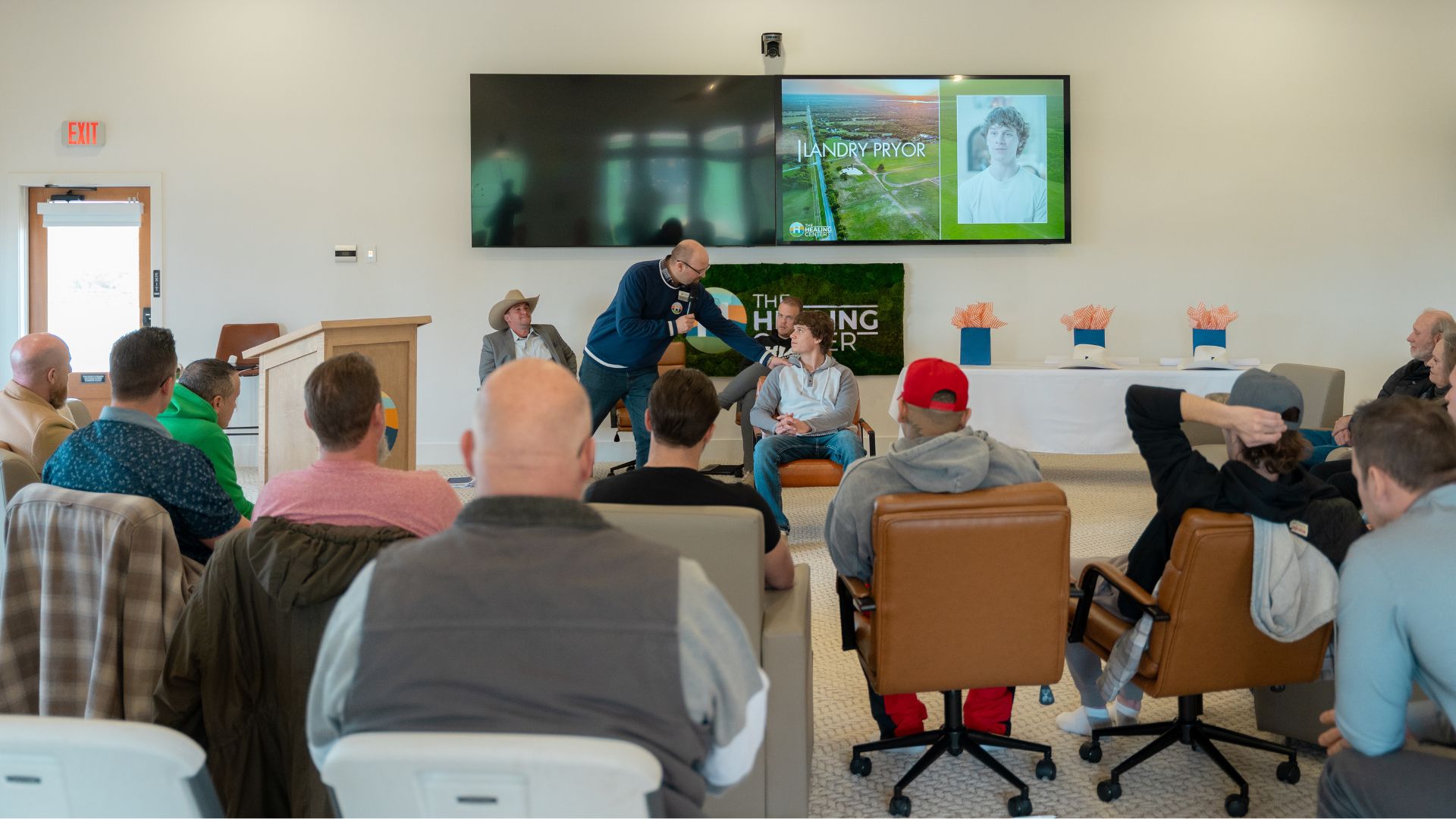
Working at The Healing Center has given me a front-row seat to something I once only hoped was possible: genuine life transformation.
Every man who walks through our doors arrives carrying something heavy. For most, it’s the weight of addiction. For others, it’s years of buried pain, broken relationships, guilt, shame, or the feeling that life has drifted them far from the man they hoped to become.
In my addiction, those were all things I struggled with. To find sobriety, I learned that I couldn’t just fix the addictive behaviors. I also had to be honest with myself about what was driving my addiction. The same is true for every other recovering addict.
That’s why the men who come to The Healing Center are challenged to slow down and look inward. In a world that often encourages men to suppress emotion and “push through,” it’s easy to ignore the hurts, habits, and patterns that shape our lives. To combat the pain this causes, we use thoughtful curriculum, conversations, group support, and spiritual reflection to help men recognize the roots of their struggles so that they can overcome their demons rather than succumb to them.
At first, this process can be extremely uncomfortable. But by the end of it, men find a freedom unlike anything they’ve ever experienced before.
For many, the most meaningful part of the journey is spiritual. A large number of the men who come here rediscover, or discover for the first time, a personal relationship with Christ. Through prayer, study, and reflection, they begin to understand that they do not have to carry life’s burdens alone. The message of surrender is not about giving up; it is about placing the weight of their past, their failures, their fears, and their future into God’s hands.
By the time our residents prepare to leave, they often have a renewed sense of identity and purpose. Many begin to recognize that their lives have a unique meaning and that even their struggles can become part of a larger story of redemption.
With hope,
Shawn Rogers | Healing Strategist

The Link Between Trauma and Compulsive Sexual Behavior Disorder

The Link Between Trauma and Compulsive Sexual Behavior Disorder
If you've spent any time researching Compulsive Sexual Behavior Disorder (CSBD), you've probably noticed one word appearing over and over again:
Trauma.
Counselors talk about it. Therapists ask about it. Treatment centers build programs around it.
It raises an obvious question: What does something that happened years — or even decades — ago have to do with someone compulsively watching pornography or seeking sex, paid or otherwise?
The answer is that, for many people, very little about Compulsive Sexual Behavior Disorder is actually driven by sex.
That's not to say sexual desire isn't part of the equation. It is. But for many individuals, the compulsive behaviors are serving a different purpose altogether. They become a way to escape and to experience relief from internal distress, if only for a few moments.
Not Everyone With Trauma Develops CSBD
It's important to make one thing clear: Trauma does not automatically lead to Compulsive Sexual Behavior Disorder.
Millions of people have experienced abuse, neglect, grief, or other traumatic events and never develop compulsive sexual behaviors.
Likewise, not every person with Compulsive Sexual Behavior Disorder has a history of significant trauma.
Compulsive Sexual Behavior Disorder is complex. Genetics, personality, family dynamics, attachment styles, emotional development, mental health conditions, accessibility of pornography, and learned coping patterns can all play a role.
Trauma is one piece of the puzzle — not the entire picture.
However, research consistently shows that unresolved trauma is common among individuals struggling with compulsive sexual behaviors. Therefore, it should not be overlooked.
Trauma Changes More Than Memories
Many people think of trauma as something a person simply remembers. In reality, trauma can shape how a person responds to stress long after the event itself has passed.
When someone experiences overwhelming fear, abuse, neglect, or chronic emotional pain/distress — particularly during childhood — the brain and body learn to prioritize survival. Instead of asking, "How do I heal from this?" the nervous system asks, "How do I make this feeling stop right now?"
For some people, healthy coping skills are modeled and developed over time. For others, especially those whose trauma went unrecognized or untreated, unhealthy coping strategies begin to fill that role.
Those strategies can take many forms. Some people turn to alcohol. Others turn to drugs, gambling, work, food, or shopping. For many others, it becomes sex.
Unfortunately, using sex or porn as a coping mechanism can eventually develop into compulsive sexual behavior, compulsive pornography use, or what many people commonly refer to as porn addiction or sex addiction.
Why Compulsive Sexual Behavior Becomes a Coping Mechanism
Sexual behavior is one of the most powerful ways the human brain can experience temporary relief from emotional distress because it activates the brain's reward system. During sexual arousal and orgasm, the brain releases a surge of chemicals such as dopamine, endorphins, and oxytocin that create feelings of pleasure. At the same time, stress hormones like cortisol often decrease.
Whether it's pornography, anonymous hookups, or paying for sex, sexual stimulation can briefly interrupt feelings of loneliness, fear, sadness, rejection, or shame.
But it doesn’t get rid of it.
Eventually, the pain returns. The loneliness, fear, sadness, rejection, and shame come back, often stronger than before because they're now accompanied by guilt, secrecy, and self-condemnation.
The Trauma-Compulsion Cycle
This is one of the reasons Compulsive Sexual Behavior Disorder can feel so confusing.
Someone may genuinely hate what they're doing. They may promise themselves they'll never watch pornography again, never visit another escort, never download another dating app, or never cross another sexual boundary.
And yet, when emotions rise, they find themselves returning to the very behavior they swore they were done with.
The cycle often looks something like this:
- Emotional pain or stress is triggered.
- The individual feels overwhelmed, anxious, ashamed, lonely, or emotionally numb.
- Sexual behavior provides temporary escape and emotional relief.
- Relief is followed by guilt, shame, and regret.
- Those emotions create even more internal distress.
- The cycle repeats.
Healing the Root, Not Just the Symptoms
If trauma contributed to the development of Compulsive Sexual Behavior Disorder, then recovery has to involve more than behavior modification.
Blocking websites, deleting apps, or making promises can certainly be helpful boundaries, but they don't resolve the underlying emotional distress.
Long-term recovery often includes learning to:
- Process unresolved trauma in healthy ways.
- Develop emotional awareness instead of emotional avoidance.
- Build healthy coping skills for stress and anxiety.
- Form safe, authentic relationships.
- Replace secrecy with honesty and accountability.
- Address shame with grace and support.
A Christ-Centered Approach to Healing Compulsive Sexual Behavior Disorder
While self-awareness and boundaries are an important first step, many people discover they can't overcome Compulsive Sexual Behavior Disorder on their own. That’s where The Healing Center can help.
The Healing Center was built for men battling addiction, shame, and brokenness — drug addicts, alcoholics, the spiritually lost, and those with gambling-related or sexual struggles.
It’s not a treatment center or rehab program. It’s a 45-day immersive recovery housing experience that offers a trauma-informed, Christ-centered approach to radical life transformation.
Focusing on peer support, life skills, healthy coping mechanisms, accountability, and spiritual growth, The Healing Center’s holistic program works men all the way back from “I am a hopeless addict” to “this is who God created me to be.” The Healing Center helps men create a life so good they never want to escape from it again.
If you're ready to stop relying on sex to cope with the ups and down of life, it’s time to address the deeper issues. Contact The Healing Center at 1-844-346-7366 today to learn more about our 45-day recovery program and speak with someone about whether it's the right next step for you.
The Healing Center provides recovery housing and recovery support for men in a drug, alcohol, and gambling-free environment with clear sexual integrity and accountability expectations. We focus on accountability, peer support, life skills, wellness, nutrition, fitness, spiritual growth, trauma-informed support, and community.
We are not a treatment center and do not provide detox, therapy, counseling, IOP, outpatient treatment, medical care, medication management, gambling treatment, trauma therapy, or clinical substance use disorder treatment.
What to Do When Rehab Doesn't Work

What to Do When Rehab Doesn't Work
There is a unique kind of heartbreak that comes after relapse. It's not just the disappointment of using again. It's the crushing belief that maybe nothing will ever change. For many people, the first thought isn't, "I need more help." It's, "I guess rehab didn't work for me."
At The Healing Center, we've walked alongside countless individuals who have believed that lie.
The truth is that addiction has never been a simple problem with a simple solution. It affects the body, certainly, but it also reaches into the mind, the emotions, relationships, and the spirit.
A treatment program may help someone become sober, but sobriety alone doesn't always heal the pain that led them to substance abuse in the first place. When someone leaves rehab carrying the same shame, trauma, loneliness, or hopelessness they entered with, it doesn’t mean that treatment failed. Sometimes it's a sign that addiction was never the root problem — it was the symptom of a deeper wound that still needs attention.
That’s where The Healing Center comes in. We aren't a treatment center or rehab program. We're a Christ-centered recovery community designed for men battling addiction, shame, and brokenness — drug addicts, alcoholics, the spiritually lost, and those with gambling-related or sexual struggles.
Healing Your Whole Self
True wellness is about more than the absence of illness or the management of symptoms. It's about restoring every part of who you are — physically, mentally, emotionally, spiritually, and relationally. While many addiction treatment programs focus on helping individuals stop using drugs or alcohol, recovery doesn't end when the substances are gone. In many cases, that's when the deeper work begins.
Whole-person healing recognizes that addiction is often a symptom rather than the root issue. Lasting recovery comes from identifying and addressing the factors that contributed to substance use in the first place.
Healing From Addiction Physically
Addiction places tremendous stress on the body. Depending on the substance, it can impact sleep, nutrition, energy levels, brain function, and overall physical health. While detox is often the first step toward recovery, healing the body is an ongoing process that requires intentional care. Eating nutritious meals, establishing healthy sleep routines, exercising regularly, and following medical recommendations can help restore physical wellness. As the body heals, many people find they have more energy, clearer thinking, and a stronger foundation for the work of recovery.
Healing From Addiction Mentally
Substance use can significantly affect the way a person thinks, processes information, and responds to stress. Recovery involves retraining the mind to recognize unhealthy thought patterns and replace them with healthier perspectives. Individual counseling, cognitive behavioral therapy (CBT), mindfulness practices, and learning practical coping skills can help individuals develop healthier responses to life's challenges. Mental healing empowers people to make thoughtful decisions rather than reacting impulsively.
Healing From Addiction Emotionally
Many people struggling with addiction carry emotional wounds that existed long before substance use began. Trauma, grief, anxiety, depression, rejection, and unresolved pain often contribute to addiction as individuals search for relief. Emotional healing means creating a safe space to acknowledge those experiences rather than numbing them. Through healthy support systems and self-reflection, individuals can learn to process difficult emotions, build resilience, and experience healing that goes beyond temporary relief.
Learn more about trauma-informed recovery.
Healing From Addiction Spiritually
For many people, addiction creates a deep sense of emptiness, hopelessness, or disconnection from God, themselves, and others. Spiritual healing is about rediscovering purpose, hope, and identity beyond addiction.
At The Healing Center, we believe faith offers a foundation for lasting recovery by reminding individuals that they are more than their past mistakes. Through prayer, Scripture, worship, and a relationship with Christ, many people find renewed strength and hope to continue their recovery journey. Faith works alongside evidence-based care to support whole-person healing.
Healing From Addiction Relationally
Addiction rarely affects only one person. It often strains marriages, families, friendships, and professional relationships, leaving broken trust and damaged communication in its wake. Recovery provides an opportunity to rebuild those connections.
While not every relationship can or should be restored, learning how to cultivate healthy, supportive relationships is an essential part of lasting recovery. Healing relationally also means finding community — surrounding yourself with people who encourage your growth, celebrate your progress, and walk alongside you through every stage of recovery.
Why Whole-Person Healing Leads to Lasting Recovery
Research has shown that people who receive comprehensive care — including mental health support, relapse prevention education, family involvement, and ongoing aftercare — tend to experience better long-term outcomes than those who only receive detoxification or short-term treatment. That is why whole-person healing leads to lasting recovery.
As you explore your options, look for a recovery program that takes a whole-person approach.
- Does it address co-occurring mental health conditions like anxiety, depression, or PTSD?
- Does it help clients process trauma rather than simply avoid substances?
- Does it involve family members in the healing process?
- Does it equip those in recovery with practical life skills, relapse prevention strategies, and a plan for continued support after immediate care ends?
For those seeking a faith-based program, it's also important to ask how spirituality is integrated into care. Faith should be more than an optional Bible study or weekly chapel service. It should shape the way recovery views identity, hope, forgiveness, purpose, and restoration while still incorporating evidence-based therapies that address the clinical side of addiction.
No treatment or recovery program can promise that someone will never relapse. Recovery is a lifelong journey, and setbacks can happen.
However, programs that focus on healing the whole person often leave individuals better prepared to navigate life's challenges because they've developed healthy coping skills, built a strong support system, and addressed the deeper issues that contributed to substance use in the first place.
If you've experienced relapse after rehab, it doesn't necessarily mean addiction treatment didn't work. It may mean you need continued support through a comprehensive addiction recovery program rather than another short-term stay.
What to Do When Rehab Doesn’t Work
If traditional rehab and addiction treatment didn’t work for you, don’t give up hope. Recovery is possible — yes, even for you.
At The Healing Center, we don't believe a relapse means you've failed. We believe it's an opportunity to take a closer look at what may have been missing from your recovery journey. Rather than asking, "How can we keep you sober for the next 45 days?" we ask, "What needs to heal so lasting recovery and life transformation can take place?"
Many men come to The Healing Center after completing detox or inpatient treatment because they realize they need more than short-term rehab. They need structured recovery housing and a Christ-centered community that helps them put recovery into practice.
We take the time to understand your story — your experiences, your struggles, your relationships, your mental health, and your spiritual life. Every person's journey into addiction is different, so every path to healing should be, too.
Offering a 45-day, trauma-informed, Christ-centered immersive experience, The Healing Center helps men build intimate relationships with Christ, reclaim their recovery, and create a life so good they never want to escape from it again.
It’s not addiction treatment. It’s not rehab. It’s Recovery Done Differently.
Contact The Healing Center today to learn more about our program, ask questions, or find out if our recovery campus is the right next step for you or someone you love. We're here to help you discover lasting freedom from addiction.
Who We Serve
The Healing Center provides recovery housing and recovery support for men in a drug, alcohol, and gambling-free environment with clear sexual integrity and accountability expectations. We focus on accountability, peer support, life skills, wellness, nutrition, fitness, spiritual growth, trauma-informed support, and community.
We are not a treatment center and do not provide detox, therapy, counseling, IOP, outpatient treatment, medical care, medication management, gambling treatment, trauma therapy, or clinical substance use disorder treatment.
Women’s Lodge planned for 2027.
Contact The Healing Center today to learn more about our program, ask questions, or find out if our recovery campus is the right next step for you or someone you love. We're here to help you discover lasting freedom from addiction.
Drug Withdrawal Symptoms: What to Expect

Drug Withdrawal Symptoms: What to Expect
The clock says 2:46 a.m., but sleep isn't coming tonight.
Your body feels exhausted, yet somehow it won't be still. You kick the blankets off because you're sweating, only to pull them back up a few minutes later when the chills set in. Your stomach churns, every muscle aches, and the anxiety in your chest keeps getting worse.
For many people, this is what drug withdrawal symptoms feel like.
What Causes Drug Withdrawal Symptoms?
Drug withdrawal symptoms happen because the brain is trying to find its balance again. After repeated drug or alcohol use, the brain adapts to the presence of those substances by changing how it produces and responds to certain neurotransmitters. Once the substance is reduced or removed, the brain doesn't immediately return to normal. Instead, it has to relearn how to function without the drug, and that adjustment is what causes what we know as withdrawal.
The symptoms someone experiences — and how severe they become — depend on several factors. The type of substance, how long it was used, how frequently it was used, a person's overall health, and whether other substances were involved can all influence the withdrawal process. That's why no two people have exactly the same experience, though many undergo common withdrawal symptoms.
For example, someone withdrawing from opioids may experience muscle aches, nausea, vomiting, diarrhea, chills, excessive sweating, and severe restlessness. Stimulant withdrawal often looks different, with profound fatigue, depression, increased appetite, and difficulty finding motivation. Alcohol and benzodiazepine withdrawal can be especially dangerous because they carry the risk of seizures, hallucinations, and other serious medical complications that require immediate attention.
How Long Do Withdrawal Symptoms Last?
One of the first questions people ask about withdrawal is also one of the hardest to answer. There isn't a single timeline that applies to everyone. Drug withdrawal symptoms can begin within hours for some substances, while others may take a day or more before symptoms appear.
For many people, the most intense symptoms occur during the first few days and gradually improve over the course of a week. However, recovery doesn't always follow a straight line, and some emotional symptoms — such as anxiety, insomnia, mood changes, and cravings — can last for weeks or even months.
The timeline depends on several factors, including the substance being used, how long it was used, the amount used, and your overall physical and mental health. Someone withdrawing from short-acting opioids, for example, will often have a different experience than someone withdrawing from alcohol or prescription benzodiazepines.
When Does Withdrawal Become Dangerous?
Although withdrawal is uncomfortable in almost every case, it isn't always dangerous. However, there are important exceptions.
Withdrawal from alcohol and benzodiazepines can cause life-threatening complications, including seizures, hallucinations, delirium tremens (DTs), dangerously high blood pressure, and heart complications. These substances affect the central nervous system, and suddenly stopping them without medical supervision can put a person's life at risk.
Withdrawal from opioids is not typically life-threatening, but it can be incredibly painful and physically exhausting. Persistent vomiting, diarrhea, and dehydration can lead to medical complications, and the intensity of the symptoms often drives people back to using before they've had the chance to recover.
Stimulant withdrawal generally doesn't carry the same physical risks, but the severe depression, fatigue, and hopelessness that some people experience should never be ignored.
Why Medical Detox Matters
Many people believe detox is simply a matter of willpower — that if they're committed enough, they should be able to get through withdrawal on their own. In reality, withdrawal is a medical process, not a test of determination.
Medical detox provides a safe environment where withdrawal symptoms can be monitored and managed by healthcare professionals. Depending on the substance, medications may be used to reduce discomfort, prevent serious complications, and make the withdrawal process safer. Equally important, medical teams can respond quickly if symptoms become severe, giving people the support they need during one of the most physically demanding stages of recovery.
What Happens After Withdrawal?
Withdrawal is the first step in recovery, but it isn't the last. As the body begins to stabilize, many people notice that their sleep improves, their appetite returns, and their energy gradually comes back. Emotional healing often takes longer than physical healing, which is why continued treatment and support play such an important role after detox.
At The Healing Center, we believe recovery is about far more than simply removing drugs or alcohol from your life. As a 45-day, trauma-informed, Christ-centered recovery campus, we help men work through the shame, brokenness, and core wounds that often fuel addiction.
It’s not a treatment center or rehab program. It’s an immersive recovery housing experience where men journey through a program that works them all the way back from “I am a hopeless addict” to “this is who God created me to be.”
By working through the core wounds of addiction, shame, and brokenness to build an intimate relationship with Christ, men are able to reclaim their recovery and create a life so good they never want to escape from it again.
If you or someone you love is preparing for life after detox, The Healing Center offers Recovery Done Differently — a place where healing goes beyond addiction and becomes a journey of radical life transformation through Christ.
Contact The Healing Center today to learn more about our program, ask questions, or find out if our recovery campus is the right next step for you or someone you love. We're here to help you discover lasting freedom from addiction.
The Healing Center provides recovery housing and recovery support for men in a drug, alcohol, and gambling-free environment with clear sexual integrity and accountability expectations. We focus on accountability, peer support, life skills, wellness, nutrition, fitness, spiritual growth, trauma-informed support, and community.
We are not a treatment center and do not provide detox, therapy, counseling, IOP, outpatient treatment, medical care, medication management, gambling treatment, trauma therapy, or clinical substance use disorder treatment.
Women’s Lodge planned for 2027.
Social Media, Gaming & Gambling Behaviors

Social Media, Gaming & Gambling Behaviors
We live in a world where entertainment is always within reach. Whether it's scrolling social media, jumping into a video game, or placing a bet from your phone, it's never been easier to find something that distracts us from the pressures of everyday life.
Social media addiction, gaming addiction, and gambling addiction affect millions of people each year, and there’s a chance it’s affecting you.
There's nothing inherently wrong with scrolling through social media after work, playing a video game with friends, or placing a friendly wager on your favorite team. The concern arises when these activities become more than entertainment and begin serving as our primary way of coping with stress, loneliness, boredom, or emotional pain.
Research shows that social media, gaming, and gambling can activate many of the same reward pathways in the brain as drugs and alcohol. Features like unpredictable rewards, notifications, achievements, and wins trigger dopamine release, encouraging us to keep coming back for more. Over time, excessive gaming and gambling can develop into behavioral addictions, while compulsive social media use can create similarly unhealthy patterns that are difficult to break.
When we're constantly looking to a screen, a game, or the next bet for comfort or relief, it's worth asking a deeper question: What am I trying to escape?
Why Social Media, Gaming & Gambling Can Be Addictive
If you've ever found yourself saying, "Just five more minutes," only to realize an hour has passed, you're not alone.
Social media, gaming, and gambling are intentionally designed to capture our attention. Every notification, achievement, level-up, or unexpected reward creates anticipation. These experiences trigger the brain's reward system by releasing dopamine, a neurotransmitter associated with pleasure and motivation. Over time, our brains learn to chase that next hit of dopamine, making it easier to return again and again.
While behavioral addictions don't involve a substance like drugs or alcohol, they can create many of the same compulsive patterns. Someone struggling with excessive gaming may neglect work, relationships, or responsibilities in pursuit of the next achievement. A person battling gambling-related behaviors may continue chasing losses despite mounting financial or personal consequences. Even compulsive social media use can leave someone feeling trapped in a cycle of endless scrolling, comparison, and validation seeking.
Our brains were never designed to experience constant stimulation every waking hour. Over time, many people begin noticing symptoms such as:
- Difficulty concentrating
- Increased anxiety
- Reduced patience
- Emotional numbness
- Lower motivation for everyday responsibilities
- Less enjoyment from offline activities
- Increased feelings of loneliness despite being constantly connected
Ironically, the very behaviors we use to feel better can slowly leave us feeling worse.
The Impact on Your Mental, Emotional & Spiritual Health
When behavioral addictions become our primary way of coping, the effects extend far beyond the time we spend on a screen. These behaviors can gradually shape the way we think, feel, and relate to others.
Mentally, they can make it more difficult to focus and regulate emotions, often making it harder to find satisfaction in everyday life. Constant stimulation trains the brain to seek quick rewards, making slower, more meaningful activities — like pursuing personal goals or spending time with God or friends and family — feel less engaging.
Emotionally, these behaviors often leave us stuck in a cycle. We turn to them to relieve stress, anxiety, boredom, or loneliness, but because they only provide temporary relief, those same emotions eventually return.
Spiritually, they can compete for our attention and affection. Instead of bringing our worries, disappointments, or struggles to God, we may find ourselves automatically reaching for a phone or controller.
What Causes Social Media, Gaming & Gambling Addictions?
It's easy to focus on the behavior itself — how much time is spent scrolling, how many hours are spent gaming, or how much money has been lost gambling. But like other addictions, the behavior isn’t the root problem; it’s a symptom of something deeper. Social media, gaming, and gambling don't create the need to escape. They simply provide an outlet for it.
Common Reasons We Escape
Some common underlying reasons include:
- Chronic stress or burnout
- Anxiety or depression
- Loneliness and isolation
- Low self-esteem or insecurity
- Unresolved trauma
- Grief or loss
- Boredom or lack of purpose
- Difficulty processing emotions
For example, someone who feels disconnected may turn to social media for validation through likes, comments, and followers. A person overwhelmed by life's responsibilities may lose themselves in online gaming because it provides a sense of control, accomplishment, or community. Someone experiencing financial stress or emotional pain may begin gambling, believing the next win will solve both their problems and their feelings.
Warning Signs That Entertainment Has Become a Problem
Not everyone who enjoys social media, gaming, or betting has an addiction. The difference often lies in whether the behavior is still a choice or whether it has begun controlling your life.
You may want to take a closer look if you notice any of the following:
- Spending significantly more time online than intended
- Feeling anxious, irritable, or restless when unable to access your phone, game, or gambling platform
- Neglecting work, school, relationships, or personal responsibilities
- Losing sleep because you can't stop scrolling or playing
- Using these activities to avoid uncomfortable emotions
- Hiding or lying about the amount of time or money spent
- Continuing despite negative consequences
- Feeling guilty afterward but repeating the behavior anyway
These patterns don't necessarily mean someone has a behavioral addiction, but they can indicate that healthier coping strategies may be needed.
How to Overcome Social Media, Gaming & Gambling Addictions
Recovery doesn't necessarily mean deleting every app, selling your gaming console, or never watching sports again. Instead, healing begins by developing healthier ways to meet the emotional needs driving the behavior.
Some practical strategies include:
Practice Awareness
Before opening an app, starting a game, or placing a bet, pause and ask yourself:
- What am I feeling right now?
- Am I bored, stressed, anxious, lonely, or overwhelmed?
- What do I actually need in this moment?
Sometimes simply recognizing the emotion reduces its power.
Set Healthy Boundaries
Healthy limits create space for intentional living. Consider:
- Scheduling screen-free hours each day
- Turning off unnecessary notifications
- Setting app or gaming time limits
- Avoiding gambling when experiencing strong emotions
- Keeping phones out of the bedroom
Boundaries aren't about punishment — they're about protecting your mental health.
Reconnect with Real Life
One of the most effective ways to reduce unhealthy digital habits is by building a life that naturally competes with them.
Focus on activities that provide lasting fulfillment such as:
- Exercise and movement
- Spending time outdoors
- Reading
- Creative hobbies
- Face-to-face conversations
- Serving others
- Volunteering
- Joining a support group
- Investing in your faith community
The more meaningful your offline life becomes, the less dependent you'll be on digital escape.
When Is It Time to Seek Help?
Many people assume they have to hit "rock bottom" before reaching out for help, but that's simply not true.
If social media, gaming, or gambling has begun interfering with your relationships, work, finances, emotional well-being, or spiritual life, it may be time to talk with someone.
At The Healing Center, we understand that behavioral addictions rarely exist in isolation. Many individuals struggling with compulsive social media use, excessive gaming, or problem gambling are also dealing with anxiety, depression, unresolved trauma, chronic stress, grief, or low self-worth.
This can make it difficult to find freedom. But it’s not impossible.
Healing looks different for every person. That's why our team develops personalized recovery plans that address your unique experiences, struggles, and goals. Rather than simply telling you to spend less time online or stop gambling, we help you discover healthier ways to process emotions, build meaningful relationships, manage stress, and find lasting fulfillment.
No matter how long you've struggled with compulsive scrolling, excessive gaming, or gambling behaviors, change is possible. The brain has an incredible ability to heal through a process known as neuroplasticity.
Begin Your Healing Journey Today
If you or someone you love is struggling with unhealthy social media use, gaming, or gambling behaviors, The Healing Center is here to help.
Contact The Healing Center at 1-844-346-7366 today to learn more about our 45-day recovery program and speak with someone about whether it's the right next step for you.
The Healing Center provides recovery housing and recovery support for men in a drug, alcohol, and gambling-free environment with clear sexual integrity and accountability expectations. We focus on accountability, peer support, life skills, wellness, nutrition, fitness, spiritual growth, trauma-informed support, and community.
We are not a treatment center and do not provide detox, therapy, counseling, IOP, outpatient treatment, medical care, medication management, gambling treatment, trauma therapy, or clinical substance use disorder treatment.
Women’s Lodge planned for 2027.
How to Stop Watching Porn: First Steps Toward Recovery

How to Stop Watching Porn: First Steps Toward Recovery
If you've searched "how to stop watching porn," chances are you've already tried.
Maybe you've deleted apps, made promises to yourself, or gone a few days — or even weeks — without watching. Then life got stressful, you felt lonely or bored, and suddenly you were right back where you started.
If that's your experience, you're not weak, and you're certainly not alone.
The truth is, quitting pornography isn't just about having more self-control. It's about changing the patterns, habits, and emotional responses that keep pulling you back.
Quitting takes work, and it isn’t easy — but it is possible. Here are practical steps that can help you break free from your porn addiction.
Stop Trying to Quit Porn and Start Understanding It
This may sound counterintuitive, but one of the biggest mistakes people make when trying to stop watching pornography is focusing all of their energy on the behavior itself. They become so consumed with resisting the urge that they never stop to ask why it's there in the first place.
Pornography doesn't usually become a regular habit overnight. For many people, it starts as curiosity or convenience, but over time it becomes a way to cope with stress after a difficult day, numb feelings of loneliness, avoid conflict in a relationship, or escape anxiety for a few minutes. The pornography isn't solving those problems, but for a moment, it distracts from them.
If you don't understand what pornography has been doing for you emotionally, you'll spend all of your energy removing the coping mechanism while leaving the underlying need untouched. Eventually, when stress builds again, your brain will naturally look for the solution it already knows.
Identify Your Porn Triggers
Learning how to stop watching porn starts with understanding why you watch it. Instead of asking, "How do I quit porn?" start asking, "What does pornography help me avoid?"
Think about the last few times you watched pornography. Were you feeling stressed after work? Did you have an argument with your spouse? Were you lying in bed unable to sleep? Maybe you felt lonely, discouraged, or simply bored with nothing to do.
Whatever it is, that is your trigger.
Now, it’s time to identify what you are searching for when you are triggered.
Address the “Why” Behind Your Porn Addiction
Addressing the “why” behind your porn addiction isn't about analyzing every search you've ever made or assigning a hidden meaning to every fantasy. It's about recognizing that our minds are rarely drawn to something without a reason. The patterns we repeat often tell us something about the needs, desires, or wounds we're carrying (even if we don’t realize it).
You may notice that you're consistently drawn to certain themes, certain relationship dynamics, or certain types of people. Ask yourself why those things appeal to you.
For example, if you consistently find yourself searching for content that centers around affection or emotional connection, ask yourself if you've been feeling disconnected in your own relationships. If you're drawn to scenarios where someone feels admired, desired, or pursued, is it possible that you've been wrestling with insecurity or wondering if you're enough? If you notice yourself returning to themes of power or control, are there areas of your life where you feel powerless or overlooked?
The point isn't to diagnose yourself or assume every search has some hidden meaning. The point is to stop treating pornography like a random habit. Habits are usually solving a problem. The question is whether they're solving it well.
A Simple Exercise to Stop Watching Porn
The next time you feel the urge to watch pornography, don't immediately tell yourself "no." Instead, pause for sixty seconds and finish this sentence:
"Right now, I wish I felt..."
Maybe the answer is peaceful. Maybe it's connected. Maybe it's confident. Maybe it's wanted. Maybe it’s valued. Maybe it’s in control. Maybe it's simply less stressed than you feel in this moment.
Whatever comes to mind, write it down.
Once you've identified what you're actually searching for, the next step is figuring out how to meet those needs in ways that genuinely help you.
Depending on what you're feeling, healthier alternatives might include:
- Going for a walk
- Calling a trusted friend
- Exercising
- Journaling
- Spending intentional time with your spouse
- Practicing prayer or meditation
- Reading a book
- Working on a meaningful hobby
- Talking with a counselor
Need Help Stopping Porn?
While self-awareness is an important first step, many people discover they can't overcome pornography on their own. That’s where The Healing Center can help.
The Healing Center was built for men battling addiction, shame, and brokenness — drug addicts, alcoholics, the spiritually lost, and those with gambling-related or sexual struggles.
It’s not a treatment center or rehab program. It’s a 45-day immersive recovery housing experience that offers a trauma-informed, Christ-centered approach to radical life transformation.
At The Healing Center, men journey through a program that works them all the way back from “I am a hopeless addict” to “this is who God created me to be.”
By working through the core wounds of addiction, shame, and brokenness to build an intimate relationship with Christ, men are able to reclaim their recovery and create a life so good they never want to escape from it again.
If you're ready to stop watching porn and start addressing the deeper issues driving it, The Healing Center is here to help. Our team is ready to walk alongside you as you rediscover your identity, rebuild your life, and experience the freedom Christ offers.
Contact The Healing Center at 1-844-346-7366 today to learn more about our 45-day recovery program and speak with someone about whether it's the right next step for you.
The Healing Center provides recovery housing and recovery support for men in a drug, alcohol, and gambling-free environment with clear sexual integrity and accountability expectations. We focus on accountability, peer support, life skills, wellness, nutrition, fitness, spiritual growth, trauma-informed support, and community.
We are not a treatment center and do not provide detox, therapy, counseling, IOP, outpatient treatment, medical care, medication management, gambling treatment, trauma therapy, or clinical substance use disorder treatment.
How Alcoholism Impacts Physical and Mental Health

How Alcoholism Impacts Physical and Mental Health
Nearly two-thirds of alcohol-related deaths (about 117,000 annually) result from chronic conditions like liver disease, heart disease, and alcohol use disorder — not accidents or injuries.
Most people understand that drinking too much isn't good for them. They know it can lead to hangovers, poor decisions, or embarrassing nights they would rather forget. What many don't realize is that alcohol doesn't just affect you while you're drinking — it changes the way your body and brain function long after the buzz wears off.
Alcohol Use Disorder (AUD), commonly referred to as alcoholism, is a chronic medical condition that affects nearly every system in the body. From your brain and heart to your immune system and digestive tract, alcohol changes how your body works because it's forced to treat alcohol as a toxin before it can focus on its normal responsibilities.
The longer someone struggles with alcohol dependence, the greater the impact on both their physical and mental health. The good news is that many of these effects can improve with sobriety.
The Physical Effects of Alcoholism
When you take a drink, your body immediately begins working to process the alcohol. Unlike food, alcohol isn't stored for later use or broken down into nutrients your body can benefit from. Instead, it's rapidly absorbed into the bloodstream, and your liver shifts its focus to eliminating it from your system. Because the body views alcohol as something it needs to remove, other important functions often take a backseat until that process is complete.
Over time, repeated heavy drinking places stress on nearly every major organ. While the liver often gets the most attention, it's far from the only part of the body affected.
How Alcoholism Affects the Brain
One of alcohol's earliest targets is the brain.
Alcohol slows communication between brain cells, which explains why even a few drinks can affect judgment, coordination, reaction time, speech, and decision-making. It's also why people may say or do things they normally wouldn't while drinking.
However, the effects don’t necessarily end just because the buzz has worn off.
Long-term alcohol misuse has been associated with:
- Memory problems
- Difficulty concentrating
- Poor problem-solving skills
- Reduced coordination
- Slower thinking
- Lasting changes in cognitive function
In severe cases, chronic alcohol dependence can contribute to alcohol-related brain damage and forms of dementia, particularly when long-term drinking leads to nutritional deficiencies like low vitamin B1 (thiamine). While some damage can improve with sustained sobriety, early treatment offers the best opportunity for recovery.
How Alcoholism Affects the Liver
The liver is responsible for filtering toxins from the bloodstream, and alcohol demands a tremendous amount of its attention.
Every drink requires the liver to break alcohol down into compounds the body can eliminate. When drinking becomes frequent or excessive, the liver simply can't keep up. Alcohol and its byproducts begin damaging liver cells, leading to inflammation and scar tissue that makes it harder for the organ to function properly.
Alcohol-related liver disease typically develops in stages:
- Fatty liver
- Alcoholic hepatitis
- Fibrosis
- Cirrhosis
One of the challenges with liver disease is that it often develops quietly. Someone may feel relatively healthy while irreversible damage is already occurring.
How Alcoholism Affects the Heart
For years, many people believed that a daily glass of wine was good for heart health. While early studies hinted at possible benefits for a small group of people, more recent research paints a different picture.
Current evidence suggests alcohol's risks often outweigh any potential cardiovascular benefits, particularly as consumption increases.
Heavy drinking raises the risk of:
- High blood pressure
- Irregular heartbeat
- Cardiomyopathy (weakening of the heart muscle)
- Stroke
- Heart failure
Alcohol can also reduce the heart's ability to efficiently pump oxygen-rich blood throughout the body, affecting other organs that depend on healthy circulation.
How Alcoholism Affects the Digestive System
Alcohol doesn't move through the digestive process like most foods. Instead, much of it is absorbed directly through the stomach and small intestine before entering the bloodstream. Along the way, it irritates the lining of the digestive tract, increases stomach acid, and interferes with the body's ability to absorb essential nutrients.
Over time, this can contribute to:
- Chronic acid reflux
- Gastritis
- Stomach ulcers
- Pancreatitis
- Malnutrition
- Blood sugar instability
Poor nutrition is especially common among people with Alcohol Use Disorder because alcohol often replaces nutritious meals while also making it harder for the body to use the vitamins and minerals it does receive.
How Alcoholism Affects the Immune System
Most people don't associate alcohol with their immune system, but the connection is significant. Even a single episode of heavy drinking can temporarily reduce the body's ability to fight off infections. With ongoing alcohol misuse, the immune system becomes less efficient, leaving individuals more vulnerable to illnesses like pneumonia, tuberculosis, and other infections.
This is one reason people living with alcoholism often experience slower recovery from illness and more frequent health complications.
Alcohol Is a Known Cancer Risk
One of the lesser-known facts about alcohol is that it's classified as a Group 1 carcinogen, placing it in the same category of cancer-causing substances as tobacco and asbestos.
As alcohol is broken down, it produces acetaldehyde, a compound that can damage DNA and interfere with the body's natural ability to repair cells. Over time, this increases the risk of abnormal cell growth and cancer development.
Heavy alcohol use has been linked to cancers of the:
- Mouth
- Throat
- Esophagus
- Liver
- Colon
- Breast
The risk increases with higher levels of alcohol consumption, regardless of whether someone drinks beer, wine, or liquor. The type of drink matters less than the amount of alcohol consumed.
The Mental Health Effects of Alcoholism
While the physical effects of alcoholism are often easier to recognize, the emotional and psychological consequences can be just as life-altering.
Many people initially turn to alcohol because it seems to quiet anxious thoughts, numb emotional pain, or provide temporary relief from stress. Unfortunately, alcohol often does the opposite over time.
Because alcohol changes brain chemistry, it can worsen existing mental health conditions while increasing the likelihood of developing new ones.
Depression
Alcohol is a depressant, meaning it slows activity in the central nervous system.
Although someone may feel relaxed while drinking, repeated alcohol use can intensify feelings of sadness, hopelessness, fatigue, and emotional numbness.
It's common for people to find themselves stuck in a cycle where they drink to escape depression, only to find that drinking makes their depression worse.
Anxiety
Alcohol may temporarily reduce feelings of anxiety, but that relief doesn't last. As alcohol leaves the body, many people experience heightened anxiety, restlessness, irritability, and even panic attacks. Withdrawal can amplify these symptoms, making it difficult to stop drinking without professional support.
Memory and Cognitive Changes
Many people think blackouts are simply part of drinking too much, but they're actually a sign that alcohol has disrupted the brain's ability to create new memories. Repeated blackouts, combined with long-term alcohol misuse, can lead to lasting changes in memory, concentration, and executive functioning.
Recovery Allows the Body and Mind to Heal
The effects of alcoholism can be serious, but they aren't always permanent. Many people notice improvements in their sleep, energy, memory, mood, blood pressure, and overall health within weeks or months of becoming sober. While some long-term damage may not be fully reversible, the body has an incredible capacity to heal once alcohol is removed and proper treatment begins.
Recovery isn't just about stopping alcohol use — it's about restoring physical health, rebuilding emotional wellness, and creating a life that feels worth staying sober for.
Find Hope at The Healing Center
At The Healing Center, we know that alcoholism affects far more than drinking habits. It impacts your health, your relationships, your confidence, and your future.
That's why our approach goes beyond just removing the addiction. We provide compassionate, evidence-based care that addresses the physical, emotional, spiritual, and psychological aspects of recovery, helping each person build a strong foundation for lasting sobriety.
Whether you're seeking help for yourself or someone you love, recovery is possible — and you don't have to face it alone.
Contact The Healing Center today to learn more about our one-of-a-kind addiction recovery program and take the first step toward healing.
Call 1-844-346-7366
The Healing Center provides recovery housing and recovery support for men in a drug, alcohol, and gambling-free environment with clear sexual integrity and accountability expectations. We focus on accountability, peer support, life skills, wellness, nutrition, fitness, spiritual growth, trauma-informed support, and community.
We are not a treatment center and do not provide detox, therapy, counseling, IOP, outpatient treatment, medical care, medication management, gambling treatment, trauma therapy, or clinical substance use disorder treatment.
Women’s Lodge planned for 2027.
What to Do When Addiction Treatment Doesn't Work

What to Do When Addiction Treatment Doesn't Work
Imagine taking your car to a mechanic because the check engine light is on. The mechanic disconnects the battery and the light disappears. Problem solved, right? Of course not. The warning light wasn't the problem. It was telling you there was a problem.
Addiction works the same way.
Too often, we spend all our energy trying to shut off the warning light without ever asking why it came on in the first place. That's why so many men leave treatment sober… but still broken. Their addiction wasn’t the root of the problem; it was how they coped with deeper wounds.
Why Addiction Treatment Alone Isn’t Enough
Treatment can play an essential role in recovery. For many men, detox and clinical treatment are the first steps toward freedom. They create the stability needed to begin the work of recovery.
But they're just that — the first steps.
Treatment is designed to help someone through a crisis, not to completely transform a lifetime of pain, shame, brokenness, and unhealthy patterns in just a few weeks.
A man can complete treatment without ever confronting the shame he's carried since childhood. He can leave sober while still believing he'll never be enough. He can learn coping skills without discovering why he needed to cope in destructive ways in the first place.
When the deeper wounds remain untouched, it's easy to return to the same coping mechanisms — even after months of sobriety.
The issue was never simply the addiction. The issue was what the addiction was helping him escape.
Why Do People Relapse After Rehab?
One of the most common questions people ask is, "Why do people relapse after rehab?"
The answer isn't as simple as a lack of willpower.
For many men, relapse isn't the result of forgetting what they learned in treatment. It's the result of returning to the same environment, the same relationships, the same stress, and the same unresolved wounds they left behind when they entered treatment.
Imagine someone breaks their leg. The doctor sets the bone, puts on a cast, and sends them home with instructions for recovery. If they take the cast off after a week and try to run a marathon, the injury is likely to return — not because the doctor failed, but because healing takes time.
Recovery works much the same way.
Treatment can stabilize someone, but lasting recovery requires ongoing growth. It requires new habits, healthy relationships, accountability, and a different way of living. Without those things, it's easy to fall back into the same patterns.
What to Do If Addiction Treatment Didn't Work
If you've completed addiction treatment and still find yourself struggling, don't lose hope. Recovery isn't over because treatment ended. In many ways, it's just beginning.
Here are four steps to consider if treatment didn't produce the lasting transformation you were hoping for.
1. Identify What You Were Really Trying to Escape
Drugs, alcohol, gambling, and other destructive behaviors rarely become problems overnight. For many men, they become ways to cope with shame, rejection, loneliness, fear, or unresolved pain.
If you only remove the coping mechanism without addressing what drove you to it, another unhealthy escape often takes its place.
Recovery becomes sustainable when you begin healing the wounds beneath the addiction — not just the addiction itself.
2. Choose an Environment That Supports Transformation
It's difficult to build a different life while surrounded by the same things that shaped the old one.
At The Healing Center, our 45-day immersive recovery housing experience gives men the opportunity to step away from destructive patterns and build new ones in a structured, Christ-centered community.
3. Stop Chasing Sobriety Alone and Start Pursuing Identity
Sobriety is an important milestone, but it was never meant to be the destination.
Recovery becomes much more powerful when the goal shifts from "I don't want to use anymore" to "I want to become the man God created me to be."
4. Commit to a Community That Will Walk With You
No one overcomes addiction alone. Healing happens in relationships — with God and with others.
The Healing Center provides recovery housing and recovery support where men experience accountability, peer support, spiritual growth, life skills, wellness, and community in a drug, alcohol, and gambling-free environment.
Our goal isn't simply to help men stop escaping. It's to help them create a life so good they never want to escape from it again.
Recovery Done Differently
At The Healing Center, we believe lasting recovery is about far more than breaking free from addiction. It's about becoming the man God created you to be.
That's why we've built a program that looks different from traditional treatment.
The Healing Center is a 45-day immersive experience that offers a trauma-informed, Christ-centered approach to radical life transformation for drug addicts, alcoholics, and men with gambling-related or sexual struggles.
During those 45 days, men aren't simply trying to avoid relapse. They're learning to build an intimate relationship with Christ, take ownership of their lives, develop healthy routines, embrace accountability, and address the core wounds that addiction has been covering for years.
Start Your Healing Journey Today
If you're wondering what to do when addiction treatment doesn’t work, we’d love to help.
Contact The Healing Center today to learn more about our faith-based, trauma-informed recovery program. Lasting transformation is waiting for you.
The Healing Center provides recovery housing and recovery support for men in a drug, alcohol, and gambling-free environment with clear sexual integrity and accountability expectations. We focus on accountability, peer support, life skills, wellness, nutrition, fitness, spiritual growth, trauma-informed support, and community.
We are not a treatment center and do not provide detox, therapy, counseling, IOP, outpatient treatment, medical care, medication management, gambling treatment, trauma therapy, or clinical substance use disorder treatment.
Women’s Lodge planned for 2027.
What You Need to Know About Triggers in Addiction Recovery

What You Need to Know About Triggers in Addiction Recovery
Recovery from addiction is about much more than simply stopping drug or alcohol use. It's a lifelong journey of healing and self-discovery, in which you learn to navigate life's challenges without returning to unhealthy coping mechanisms. That’s why one of the biggest obstacles people face during recovery is dealing with triggers.
Understanding what triggers are, recognizing them early, and developing healthy coping strategies can make a significant difference in maintaining long-term sobriety. At The Healing Center, we believe education is one of the most powerful tools for relapse prevention.
What Are Triggers in Addiction Recovery?
A trigger is anything that causes cravings or urges to use drugs or alcohol. Triggers can activate memories and emotions associated with past substance use, making recovery more challenging.
Triggers don't necessarily mean relapse is inevitable. Instead, they serve as warning signs that additional coping skills and support may be needed.
Triggers generally fall into two categories:
- Internal triggers: Thoughts, emotions, or memories.
- External triggers: People, places, situations, or objects connected to past substance use.
Common Internal Triggers
Internal triggers often arise unexpectedly. These emotional or mental experiences can create powerful cravings that family members may not even know their loved one is struggling with.
Common internal triggers include:
Stress
Stress is one of the leading causes of relapse. Financial concerns, work responsibilities, family conflict, or major life changes can increase emotional pressure and tempt individuals to seek relief through substances.
Anxiety
Many people originally used substances to manage anxiety symptoms. During recovery, untreated anxiety often increases the desire to self-medicate.
Depression
Feelings of sadness, loneliness, hopelessness, or emotional numbness can become powerful relapse triggers without proper mental health support.
Anger
Unresolved anger or frustration may lead someone to seek immediate relief through drugs or alcohol.
Boredom
Idle time can be surprisingly dangerous during recovery. Without meaningful activities, old habits may begin to resurface.
Overconfidence
Feeling "cured" or believing addiction is no longer a concern can lead individuals to stop attending meetings, therapy, or support groups — greatly increasing relapse risk.
Common External Triggers
External triggers are environmental reminders of past substance use.
Examples include:
- Visiting bars or clubs
- Driving past locations where substances were purchased
- Seeing drug paraphernalia
- Spending time with friends who still use substances
- Attending parties where alcohol is present
- Holidays and celebrations
- Certain music, smells, or television shows
Even seemingly harmless situations can unexpectedly trigger cravings.
How to Recognize When You're Being Triggered
Triggers don't always result in immediate cravings. Often, they begin with subtle emotional or physical changes that can escalate if left unaddressed. Learning to recognize these early warning signs is an important part of relapse prevention. The more aware you are of your personal triggers, the easier it becomes to respond with healthy coping skills instead of returning to old habits.
Some common signs that you may be experiencing a trigger include:
- Thinking about past substance use more frequently
- Romanticizing or minimizing previous drug or alcohol use
- Feeling restless, anxious, or irritable
- Withdrawing from family, friends, or support groups
- Difficulty concentrating
- Changes in sleep or appetite
- Feeling overwhelmed by emotions
- Experiencing sudden cravings to drink or use drugs
Recognizing these signs early gives you the opportunity to use healthy coping skills before a craving becomes harder to ignore.
Healthy Ways to Cope With Triggers
Although triggers cannot always be prevented, they can be managed. Developing healthy coping strategies allows individuals to navigate difficult moments without returning to drugs or alcohol.
Build a Strong Support System
Recovery is rarely successful in isolation. Staying connected with supportive people provides accountability and encouragement when challenges arise.
This support network may include:
- Therapists
- Recovery coaches
- Sponsors
- Trusted family members
- Friends who support sobriety
- Peer recovery groups
Having someone to call during difficult moments can make a tremendous difference.
Develop Healthy Stress Management Techniques
Because stress is one of the most common relapse triggers, learning healthy ways to manage it is essential.
Helpful techniques include:
- Deep breathing exercises
- Meditation or mindfulness
- Regular physical activity
- Journaling
- Prayer or spiritual practices
- Spending time outdoors
- Listening to calming music
Over time, these healthy habits can replace substance use as a way to regulate emotions.
Create a Structured Daily Routine
Boredom and lack of purpose often increase vulnerability during recovery. Maintaining a consistent routine can provide stability and reduce opportunities for cravings.
Healthy routines often include:
- Regular sleep schedules
- Exercise
- Nutritious meals
- Attending therapy or recovery meetings
- Volunteering
- Pursuing hobbies
- Spending quality time with family
- Attending church or Bible studies
Structure creates positive momentum that supports long-term sobriety.
Avoid High-Risk Situations
Especially during early recovery, it's important to avoid environments that may increase the likelihood of relapse.
This could include:
- Bars and nightclubs
- Parties where alcohol or drugs are present
- Friends who continue using substances
- Neighborhoods associated with previous drug use
Setting healthy boundaries is an important part of protecting recovery — not something to feel guilty about. Triggers are often strongest during early recovery, when the brain is still adjusting to life without drugs or alcohol. Over time, many people find that cravings become less frequent as they continue practicing healthy coping skills.
Family Members Experience Triggers Too
Triggers don’t just affect the person in recovery. Loved ones often experience emotional triggers of their own, especially after months or years of living with the uncertainty of active addiction.
Family members may feel triggered by:
- Missed phone calls or unanswered texts
- Changes in mood or behavior
- Financial stress
- Holidays or anniversaries connected to past substance use
- Smells, tastes, or sounds associated with past substance use
Below are a few examples of triggers that have resulted from a loved one’s substance use disorder:
“My dad was an alcoholic for the majority of my life, and to this day, I panic if I smell whiskey.”
“If my husband is asleep on the couch when I get home, my first thought is that he drank too much — even though he’s now been sober for years.”
“My son used to watch the movie Ted when he was intoxicated. Now, I cannot watch that movie without thinking about his addiction.”
If you love someone who struggles with addiction, consider joining a Finding Hope support group.
Finding Hope was created to remind you that you don't have to carry those feelings by yourself. It gives family members a place to ask questions, share their experiences, and connect with people who truly understand what it's like to love someone with a substance use disorder.
One of the biggest things we talk about is learning to separate what's happening today from what happened in the past. If your loved one doesn't answer the phone, it's understandable that your mind immediately goes to the worst-case scenario if that's happened before. If they seem quiet or withdrawn, you may automatically wonder if they've relapsed. Those reactions don't mean you're overreacting — they're often the result of living through the trauma of addiction. But they can be exhausting and taxing.
Just as your loved one is learning healthier ways to cope with stress and triggers, you can learn healthier ways to respond to your own. Learn more about Finding Hope, a faith-based support group for the loved ones of addicts and alcoholics. Hope and healing are waiting for you.
Take the First Step Toward Healing
Whether you're the one in recovery or the person who loves someone struggling with a substance use disorder, it's important to remember that triggers are a normal part of the healing process. They don't mean you've failed, and they don't erase the progress that's already been made. But you do need to be able to recognize them, understand why they happen, and know how to respond in a healthy way.
At The Healing Center, we know addiction affects more than one person. It impacts spouses, parents, children, siblings, and close friends. That's why we believe healing should include the entire family. When everyone has the opportunity to process their experiences, learn healthy coping skills, and receive support, recovery becomes stronger.
No matter where you are in your journey, you don't have to figure it out on your own. Contact The Healing Center today to learn more about our recovery housing, peer recovery support, and Finding Hope support groups. Whether you're looking for accountability in recovery or support as a family member, we're here to help.
Call 1-844-346-7366
The Healing Center provides recovery housing and recovery support for men in a drug, alcohol, and gambling-free environment with clear sexual integrity and accountability expectations. We focus on accountability, peer support, life skills, wellness, nutrition, fitness, spiritual growth, trauma-informed support, and community.
We are not a treatment center and do not provide detox, therapy, counseling, IOP, outpatient treatment, medical care, medication management, gambling treatment, trauma therapy, or clinical substance use disorder treatment.
Can Trust Be Rebuilt After Alcoholism?

Can Trust Be Rebuilt After Alcoholism?
One of the biggest misconceptions about recovery is that once someone stops drinking, relationships automatically begin to heal. In reality, sobriety is often just the beginning.
For many people recovering from alcohol addiction, rebuilding trust is one of the most difficult parts of the recovery journey. Loved ones may be grateful that drinking has stopped while still feeling uncertain, guarded, or afraid of being hurt again.
At The Healing Center, we believe that's a normal part of healing.
Trust isn't rebuilt because someone says they're different. It's rebuilt because their daily actions prove they’re different. Understanding why trust was broken — and what it takes to restore it — can help both individuals in recovery and the families walking alongside them rebuild trust after alcoholism.
Why Does Alcoholism Break Trust?
Alcohol addiction affects much more than a person's physical health.
Over time, addiction changes priorities, behaviors, and relationships. As alcohol becomes the primary way someone copes with stress, shame, trauma, anxiety, or emotional pain, the people closest to them frequently experience the consequences.
Broken trust may develop because of:
- Broken promises
- Dishonesty about drinking
- Financial problems
- Emotional withdrawal
- Angry outbursts
- Missed family responsibilities
- Unpredictable behavior
- Driving under the influence
- Legal issues
- Repeated relapses
While these experiences look different from one family to another, they often create the same outcome: uncertainty.
Trust depends on predictability. We build trust when we know someone will consistently behave a certain way. Addiction slowly erodes that predictability. Over time, loved ones stop feeling confident about what to expect because their experiences have taught them that today's promises may not match tomorrow's reality.
Learn more about how families are impacted by addiction.
Why Doesn't Sobriety Immediately Rebuild Trust?
One of the hardest realities of recovery is that sobriety and trust operate on different timelines. A person can stop drinking today. Trust, however, is built from accumulated experiences, and those experiences cannot be replaced overnight.
Imagine someone who has broken a promise dozens of times over several years. More likely than not, you don’t have confidence that they will keep the next promise they make. It isn’t until they keep promise after promise, over and over and over again, that you start to believe that they will do what they said they would.
The same thing happens in recovery.
The people closest to someone struggling with alcoholism don't simply remember one broken promise or one difficult season. They remember hundreds of moments.
Maybe they learned not to get their hopes up when vacation plans were made. Maybe they stopped asking for help because they expected disappointment. Maybe they began checking bank accounts, watching for changes in mood, or wondering if alcohol was involved every time something felt "off."
Those behaviors didn't develop overnight, and they don't disappear overnight either.
If you love someone who struggles with alcohol consumption, consider joining Finding Hope, a family support group for the loved ones of drug addicts and alcoholics.
What Actually Rebuilds Trust After Alcoholism?
If trust is broken through repeated experiences, it makes sense that trust is rebuilt the same way.
Many people enter recovery believing there is a conversation that will finally convince their loved ones things are different. They wait for the right opportunity to explain themselves, offer another apology, or promise that this time will be different. Those conversations matter — honest communication is an important part of recovery. But words alone rarely restore trust.
To rebuild trust after alcoholism, loved ones need something more than reassurance. They need new experiences that gradually replace the old ones.
If you are in recovery, below are a few ways to help rebuild trust.
How to Rebuild Trust After Alcoholism
Follow Through on What You Say
One of the simplest — and most powerful — ways to rebuild trust is to do what you said you were going to do.
If you say you'll be home at six, be home at six.
If you commit to attending a recovery meeting, go.
If you promise your child you'll be at their game, show up.
Each commitment that is kept becomes another piece of evidence that things are different today than they were yesterday.
Practice Radical Honesty
Addiction often creates patterns of secrecy. Sometimes people lie to protect the addiction. Other times they hide things because they're afraid of disappointing the people they love. Recovery requires replacing secrecy with transparency.
Being honest about struggles, emotions, mistakes, and even temptations demonstrates that you're no longer trying to protect a secret life. While those conversations can feel uncomfortable, they also create opportunities for deeper trust because loved ones no longer have to wonder what is being left unsaid.
Accept Accountability Without Becoming Defensive
If a loved one says they're still struggling to trust you, it's natural to feel discouraged. You may think, "I'm doing everything I can. Why can't they see that?" But rebuilding trust isn't about convincing someone they're wrong for feeling hurt.
That doesn't mean you should accept blame for things you didn't do. But you should recognize that the consequences of addiction don't disappear simply because drinking has stopped.
Listening without becoming defensive communicates: "I care more about understanding your experience than protecting my image."
Be Patient With the Process
Many people in recovery want to know exactly how long it will take before their spouse or parents trust them again or their children feel safe around them. The truth is that every relationship heals differently.
The amount of time it takes often depends on factors like how long the addiction lasted, how deeply the relationship was affected, whether there have been previous relapses, and how consistently recovery is maintained.
Rather than measuring progress by whether someone fully trusts you yet, focus on becoming the kind of person who is trustworthy every day.
Why Rebuilding Trust Benefits Your Recovery
Rebuilding trust isn't only beneficial for your loved ones — it also strengthens your own recovery.
Every commitment you keep reinforces the habits that support long-term sobriety. Every honest conversation helps replace old patterns of secrecy with healthier communication. Every act of accountability becomes another reminder that recovery is changing more than your relationship with alcohol.
Rebuilding trust isn't separate from recovery. It is part of recovery.
Forgiveness and Trust Are Not the Same Thing
One of the most important things to understand during recovery is that forgiveness and trust are not the same thing. While they are closely related, they serve very different purposes in the healing process.
Forgiveness is a choice to let go of resentment and move toward healing. Trust, on the other hand, is confidence that someone will consistently make healthy choices moving forward.
In other words, forgiveness looks backward while trust looks forward.
Recovery Is About More Than Earning Trust Back
While rebuilding trust is an important part of recovery, it shouldn't become the only reason someone chooses to change.
Recovery is about becoming healthy emotionally, mentally, physically, and spiritually. As people grow in character, honesty, humility, and accountability, trust often follows naturally. Ironically, many people find that trust returns when they stop trying to convince others they've changed and instead focus on continuing to grow.
Frequently Asked Questions About Rebuilding Trust After Alcoholism
Can trust be rebuilt after alcoholism?
Yes, trust can be rebuilt after alcoholism, but it usually takes time. Trust is restored through consistent actions, honest communication, accountability, and long-term recovery. Loved ones need repeated experiences that show life is becoming safer and more predictable before they feel comfortable trusting again.
How long does it take to rebuild trust after alcoholism?
There is no set timeline for rebuilding trust after alcoholism. Some relationships begin healing within months, while others take years. The timeline often depends on how long the addiction lasted, how deeply the relationship was affected, whether there have been previous relapses, and how consistently the person remains committed to recovery.
Why doesn't my family trust me after I stopped drinking?
Sobriety and trust do not heal at the same speed. Your family may be grateful that you stopped drinking while still carrying the fear, hurt, or disappointment they experienced during active addiction. Often, it means they need more time and consistency before they feel safe again.
Is an apology enough to rebuild trust after alcohol addiction?
An apology is important, but it is usually not enough by itself. Apologies acknowledge the harm that was done, but trust is rebuilt through behavior. Loved ones need to see honesty, follow-through, accountability, and emotional stability over time before they can begin believing that things are truly different.
Can a marriage recover after alcoholism?
Yes, many marriages recover after alcoholism, but healing requires patience from both people. The person in recovery must remain committed to sobriety, honesty, and accountability, while the spouse may also need time and support to process the pain addiction caused. In many cases, recovery creates an opportunity for couples to build healthier communication and stronger boundaries than they had before.
What should I do if my loved ones still don't trust me?
If your loved ones still don't trust you, continue focusing on becoming trustworthy rather than demanding trust. Keep your commitments, tell the truth, respect boundaries, stay engaged in recovery, and listen when they share how addiction affected them. Trust often returns when loved ones repeatedly experience safety and consistency over time.
Can trust be rebuilt after relapse?
Trust can sometimes be rebuilt after relapse, but relapse often makes the process more difficult because loved ones may feel like old patterns are returning. The most important thing is to take responsibility quickly, return to recovery support, be honest about what happened, and make changes that reduce the risk of future relapse.
How The Healing Center Helps Men Rebuild Trust After Alcoholism
At The Healing Center, we believe rebuilding trust is not something that happens through willpower alone. It happens as people begin addressing the underlying issues that contributed to addiction while learning healthier ways to live, communicate, and build relationships.
For many men, alcohol was never the root problem. It was a way to cope with unresolved pain, trauma, shame, anxiety, or other challenges they didn't know how to navigate. While stopping alcohol use is an essential part of recovery, lasting change requires developing new ways to respond to life's difficulties.
Through accountability, peer support, life skills, spiritual growth, wellness, and a trauma-informed approach to recovery, The Healing Center gives men the opportunity to build a strong foundation for long-term change so they can become husbands, fathers, sons, friends, and coworkers others can depend on again.
Start Your Healing Journey Today
If you're wondering whether trust can be rebuilt after alcoholism, the answer is yes. At The Healing Center, we've seen countless men restore relationships that once seemed beyond repair.
If you're ready to take the next step, we'd love to help. Contact The Healing Center today to learn more about our faith-based, trauma-informed recovery program.
The Healing Center provides recovery housing and recovery support for men in a drug, alcohol, and gambling-free environment with clear sexual integrity and accountability expectations. We focus on accountability, peer support, life skills, wellness, nutrition, fitness, spiritual growth, trauma-informed support, and community.
We are not a treatment center and do not provide detox, therapy, counseling, IOP, outpatient treatment, medical care, medication management, gambling treatment, trauma therapy, or clinical substance use disorder treatment.
Women’s Lodge planned for 2027.
What Is Trauma-Informed Recovery?

What Is Trauma-Informed Recovery?
For decades, addiction treatment often focused on changing behavior. Stop drinking. Stop using drugs. Make better choices. Develop healthier habits.
Those things matter, but they don't always answer the deeper question: Why did someone need alcohol, drugs, gambling, sex, or other coping mechanisms in the first place?
For many people, the answer lies in unresolved trauma. The challenge is that many individuals struggling with substance use or compulsive behaviors don't realize that trauma is influencing their lives. When people hear the word "trauma," they often think of a single catastrophic event. In reality, trauma can take many forms.
At The Healing Center, we meet people every day who would never describe themselves as traumatized. They simply know life has been hard, whether they endured physical, verbal, or sexual abuse, navigated abandonment, lived with an addict or alcoholic, or faced incarceration. Others experienced chronic stress, emotional neglect, bullying, poverty, family dysfunction, or repeated losses.
While these experiences may look different on the surface, they can leave similar lasting emotional wounds that impact how a person thinks, feels, and responds to life's challenges, ultimately contributing to addiction.
The Connection Between Trauma and Addiction
Trauma changes the brain and nervous system. When someone experiences overwhelming stress or pain, the body can remain stuck in survival mode long after the event has passed. This may lead to anxiety, depression, hypervigilance, emotional numbness, difficulty trusting others, or persistent feelings of shame.
In many cases, substances and compulsive behaviors become a way to manage these overwhelming emotions — a process often referred to as self-medication.
So, if you are wondering, "Can trauma cause addiction?" the answer is yes. While trauma does not guarantee someone will develop a substance use disorder, research consistently shows a strong connection between trauma and addiction. Individuals with unresolved trauma and adverse childhood experiences (ACEs) are at a significantly higher risk of developing substance use disorders and other compulsive behaviors.
Some signs that trauma may be affecting recovery include:
- Difficulty trusting others
- Chronic feelings of shame or guilt
- Fear of abandonment or rejection
- Persistent anxiety or hypervigilance
- Emotional numbness
- People-pleasing behaviors
- Difficulty regulating emotions
- Repeated relapse despite a genuine desire to change
Learn more about childhood trauma and addiction.
For someone struggling with addiction, the substance or behavior often becomes a way to cope with emotions that feel overwhelming or difficult to understand. Alcohol may temporarily reduce anxiety. Drugs may numb emotional pain. Gambling, pornography, shopping, or other compulsive behaviors can provide a brief escape from stress, loneliness, shame, or fear.
Over time, these coping mechanisms can create new problems while leaving the original wounds unaddressed. That's one reason recovery can feel so frustrating. Many people stop using substances for a period of time, only to find that the emotional pain, unhealthy thought patterns, or relationship struggles that existed before are still there.
This is where trauma-informed recovery differs from traditional approaches. Rather than focusing solely on stopping a behavior, trauma-informed recovery seeks to understand the experiences that may be contributing to it. It recognizes that addiction is often connected to deeper issues that need attention if lasting recovery is going to occur.
What Is Trauma-Informed Addiction Recovery?
Trauma-informed recovery goes beyond traditional addiction treatment by recognizing the relationship between mental health and addiction. Rather than focusing solely on symptoms, trauma-informed care seeks to understand the underlying causes of addiction and emotional distress. Learn more about mental health and addiction.
At The Healing Center, trauma-informed recovery involves creating a safe, supportive environment where individuals can explore their stories without judgment. Recovery focuses on helping people understand the connection between their past experiences and current struggles while developing healthier ways to cope.
Key principles of trauma-informed recovery include:
- Creating physical and emotional safety
- Building trust and transparency
- Empowering individuals to participate in their healing process
- Recognizing the impact of trauma on mental health and addiction
- Promoting resilience, hope, and long-term recovery
This approach acknowledges that healing cannot happen through shame, punishment, or fear.
What Does Trauma-Informed Recovery Look Like?
Trauma-informed recovery is not a specific therapy or treatment model. Instead, it is an approach to care that recognizes the impact trauma can have on a person's behavioral health, relationships, emotional well-being, and recovery journey.
In a trauma-informed addiction treatment program — or general recovery program like at The Healing Center — the goal is not simply to stop substance use. The goal is to help individuals understand the connection between past experiences and present behaviors while developing healthier ways to cope with life's challenges.
This often involves a combination of counseling, peer support, relapse prevention planning, life skills development, and evidence-based approaches. As individuals gain greater self-awareness, they can begin replacing unhealthy coping mechanisms with strategies that support emotional regulation, resilience, and long-term recovery.
Start Your Healing Journey Today
If you're ready to explore a trauma-informed approach to recovery, The Healing Center is here to help.
Contact The Healing Center today to learn more about our trauma-informed recovery program and take the first step toward healing from trauma, addiction, and the challenges that may be standing in the way of long-term recovery.
The Healing Center provides recovery housing and recovery support for men in a drug, alcohol, and gambling-free environment with clear sexual integrity and accountability expectations. We focus on accountability, peer support, life skills, wellness, nutrition, fitness, spiritual growth, trauma-informed support, and community.
We are not a treatment center and do not provide detox, therapy, counseling, IOP, outpatient treatment, medical care, medication management, gambling treatment, trauma therapy, or clinical substance use disorder treatment.
Women’s Lodge planned for 2027.
What Is an Addiction Intervention?

What Is an Addiction Intervention?
An addiction intervention is a structured conversation designed to encourage someone with a substance use disorder to seek treatment.
Family members, close friends, and sometimes a professional interventionist come together to discuss the impact of addiction and present a clear path toward recovery. The goal is not to criticize or shame the individual. Instead, the intervention focuses on helping them understand how their addiction is affecting their life while offering immediate access to treatment for their addiction.
Why Addiction Interventions Matter
Addiction changes the way a person thinks, behaves, and responds to concerns from others. Even when the consequences of substance abuse or compulsive behaviors become obvious to everyone around them, many individuals continue to minimize the problem or believe they can stop on their own.
Whether they are addicted to drugs, alcohol, sex, pornography, gambling, or anything else, this denial can prevent people from seeking the help they need.
An addiction intervention creates an opportunity for loved ones to speak honestly about what they have witnessed and explain why professional treatment has become necessary. For many individuals, hearing these concerns from multiple people they trust can be a turning point in their recovery journey.
When Is a Drug or Alcohol Intervention Needed?
An intervention may be necessary when:
- The individual refuses to seek help despite clear signs of addiction.
- Substance use is causing harm to their health, relationships, career, or finances.
- Previous conversations about treatment have been unsuccessful.
- The person's behavior has become increasingly dangerous or destructive.
- Loved ones feel overwhelmed and need professional guidance.
The truth is, there is rarely a perfect time for an intervention. If you're questioning whether an intervention is needed, it may be time to explore what an intervention could look like and what recovery resources are available.
How an Addiction Intervention Works
Not every situation requires the same approach. Before planning an intervention, it helps to consider how willing your loved one is to discuss their addiction and the possibility of getting help.
In some cases, a person may be open to having honest conversations about recovery. When this happens, a soft intervention may be the best place to start. A soft intervention is a planned discussion where everyone involved is aware of the purpose of the meeting ahead of time. The goal is to create a supportive environment where treatment options can be discussed without surprise or confrontation.
During the intervention, participants share personal experiences that illustrate how addiction has affected relationships, finances, emotional well-being, and overall quality of life. Rather than making accusations, they focus on what they have noticed and what they personally feel.
A key part of the intervention process is identifying any enabling behaviors that may be keeping the addiction going. Family members and friends often step in to protect their loved one from the consequences of their choices. They may provide money, make excuses, or take over responsibilities that belong to the individual struggling with addiction.
Because of this, an intervention is not just about asking someone to get help. It's also about establishing healthy boundaries. Everyone involved should be clear about the boundaries they are willing to maintain moving forward and what will change if treatment is refused.
After boundaries have been shared, the addict is presented with a treatment plan. This may include medical detox, inpatient rehab, outpatient treatment, counseling, or other evidence-based addiction recovery services. Having treatment arrangements prepared ahead of time can increase the likelihood that the person will accept help and begin recovery immediately.
Other situations are more challenging. If your loved one refuses to acknowledge their addiction or becomes defensive whenever treatment is mentioned, a hard intervention may be necessary. Families often benefit from working with a professional interventionist who can guide the conversation and help navigate difficult emotions.
Your Healing Center professional interventionist is here to walk you through the entire process. Whether you need guidance for a soft intervention or support navigating a hard intervention, trained professionals are available to help you take the next step toward recovery for your loved one and healing for your family. Call 1-844-346-7366 today.
The Role of a Professional Interventionist
While some families conduct interventions on their own, many choose to work with a professional interventionist. These specialists understand the emotional complexities of addiction and can help families prepare for difficult conversations.
A professional interventionist helps create a plan, facilitates communication during the meeting, and provides recommendations for substance abuse treatment programs or alternative recovery options. Their presence can be especially valuable when addiction is severe or when mental health concerns are involved, but regardless, working with an experienced intervention professional can help reduce conflict and improve the likelihood of a positive outcome.
What Happens After an Intervention?
The ideal outcome is that the individual agrees to enter treatment immediately. However, not every intervention results in an immediate "yes."
Regardless of the response, it's important for loved ones to remain consistent with the boundaries established during the intervention. Recovery is often a process, and even if someone initially refuses help, the intervention may plant the seed for future change.
Treatment options may include:
- Medical detoxification
- Inpatient rehabilitation
- Outpatient treatment programs
- Counseling and therapy
- Support groups and recovery communities
- Sober Living
Common Myths About Addiction Interventions
Myth #1: Interventions Are Aggressive Confrontations
Many people picture interventions as dramatic confrontations filled with anger and ultimatums. In reality, effective interventions are carefully planned conversations centered on support and recovery.
Myth #2: Interventions Only Work for Severe Addiction
Interventions can be effective at any stage of addiction. Early intervention may prevent more serious consequences from developing.
Myth #3: If They Refuse Help, the Intervention Failed
Even if treatment isn't accepted immediately, interventions often create awareness and can influence future decisions to seek help.
Take the First Step Toward Recovery
An addiction intervention is more than a conversation. It is an opportunity to interrupt the cycle of addiction and offer a path toward healing. With proper planning, clear boundaries, and access to recovery resources, an intervention can help someone move from denial to treatment and from addiction to recovery.
If you're considering an intervention for a loved one, remember that you do not have to navigate the process alone. Contact The Healing Center today to learn if you qualify for FREE intervention services.
The Healing Center provides recovery housing and recovery support for men in a drug, alcohol, and gambling-free environment with clear sexual integrity and accountability expectations. We focus on accountability, peer support, life skills, wellness, nutrition, fitness, spiritual growth, trauma-informed support, and community.
We are not a treatment center and do not provide detox, therapy, counseling, IOP, outpatient treatment, medical care, medication management, gambling treatment, trauma therapy, or clinical substance use disorder treatment.
Why Mental Health Matters in Families Impacted By Addiction

Why Mental Health Matters in Families Impacted By Addiction
Mental health shapes how we think, feel, communicate, and connect with the people around us. While it's often discussed as something personal and individual, mental health is deeply influenced by the relationships we experience every day, especially within our families.
At The Healing Center, we believe healing from addiction starts with understanding that families are more than a collection of individuals living under the same roof. They are emotional ecosystems.
Understanding the role mental health plays in that ecosystem helps us better understand the challenges families face — and why families have to heal from addiction together.
Families Are Emotional Ecosystems
Just as every part of a natural ecosystem influences the health of the whole, every member of a family contributes to the emotional climate of the home. The way people communicate, respond to stress, express emotions, and support one another creates an environment that affects everyone living within it.
When one family member is struggling, others often feel the impact. Anxiety, grief, conflict, or emotional distress rarely stays isolated to a single person and can act as a cancer spreading through the household when not managed in a healthy way. Likewise, acts of encouragement, empathy, and healthy communication can have a positive ripple effect throughout the household.
Our families are often our first teachers when it comes to mental and emotional health. Long before we understand concepts like coping skills, boundaries, or resilience, we learn from the people around us by observing the patterns within our homes.
These early experiences play a key role in shaping the beliefs we carry about ourselves, our relationships, and the world around us, ultimately influencing whether we feel safe asking for help when we need it.
In healthy families, children learn coping skills that help them manage life's challenges. They learn that emotions can be expressed safely, conflicts can be resolved respectfully, and asking for help is a sign of strength rather than weakness. These lessons provide a foundation for resilience and emotional well-being throughout life.
When it comes to mental health in families impacted by addiction, however, survival often becomes the priority. Family members may spend so much time managing crises and avoiding conflict that healthy emotional development takes a back seat. Without realizing it, families can pass down patterns of anxiety, avoidance, people-pleasing, emotional withdrawal, or unhealthy communication from one generation to the next.
Family Roles in Addiction and Their Impact on Mental Health
As families adapt to the challenges of addiction, members often begin taking on specific roles in an attempt to restore balance or reduce conflict. While these roles may help the family function in the short term, they can also create emotional burdens that affect mental health over time.
Recognizing the five main roles family members adopt when someone in their household is trapped in addiction can help families better understand one another and begin breaking free from unhealthy patterns that no longer serve them.
The Caretaker: Also known as the Enabler, this person attempts to manage crises and shield the loved one from consequences. Driven by a sense of obligation, their tireless efforts to "fix" everything often lead to severe burnout.
The Hero: Often the eldest child, they try to compensate for the family's chaos by overachieving. While their success provides stability, it can mask a constant fear of failure and unrealistic perfectionism.
The Scapegoat: This member acts out or is unfairly blamed for the household's problems. This rebellious behavior diverts attention away from the primary issue, like an addiction.
The Lost Child: By withdrawing emotionally and becoming highly independent, this individual attempts to draw as little attention as possible. They appear self-sufficient but frequently grapple with feelings of neglect and isolation.
The Mascot: They use humor, charm, and silliness to defuse volatile situations and lighten the mood. However, this comedic coping mechanism is used to hide deeper fears and emotional pain.
As children transition into adulthood, these survival strategies rarely disappear on their own. Instead, they often become deeply ingrained patterns that continue influencing relationships, careers, self-worth, and mental health.
While the environment may change, the underlying emotional drivers — fear, guilt, shame, anxiety, or loneliness — often remain the same until they are recognized and addressed.
For the Caretaker, adulthood often brings an overwhelming sense of responsibility for the people around them. They may find themselves drawn to struggling partners, taking on more than their share of responsibilities at work, or becoming the person everyone turns to in a crisis. Because so much of their identity has been built around helping others, they often struggle to recognize their own needs. Many spend years putting themselves last, eventually experiencing exhaustion and burnout without understanding why.
The Hero often carries their childhood role into adulthood by pursuing achievement. Success becomes more than a goal — it becomes a source of identity. They are frequently high performers who appear confident and capable, but beneath that success is often a fear of failure or disappointing others. Rest can feel unproductive, and self-worth becomes closely tied to accomplishments. What others see as ambition is often rooted in a desire to create the stability and approval they may have lacked growing up.
The Scapegoat frequently enters adulthood carrying the belief that they are somehow flawed or responsible for problems around them. They may expect criticism before it happens or assume rejection is inevitable. This can lead them to push people away, struggle with authority figures, or unconsciously repeat unhealthy relationship patterns. The defiance or rebellion others see is often masking years of hurt and a deep desire to be understood.
For the Lost Child, staying invisible can become a way of life. They often appear independent and self-sufficient, but many struggle to express their needs or ask for support. Avoiding conflict can cause them to withdraw when relationships become emotionally demanding. Although they often long for connection, they can find it difficult to let others get close enough to provide it.
The Mascot often becomes the person who keeps everyone laughing. Humor, charm, and positivity helped ease tension during childhood, and those same traits continue into adulthood. While they are often well-liked and capable of bringing light into difficult situations, they may also use humor to avoid deeper emotions. Vulnerability isn’t something they are typically comfortable with.
How Families Can Heal From Addiction Together
For many families, one of the most difficult parts of recovery is realizing that when addiction is removed, the underlying family dynamics often remain. The substance may no longer be present, but years of fear, mistrust, resentment, and unhealthy communication patterns do not disappear overnight.
This is why healing requires more than sobriety. It requires intentional work on the emotional wounds addiction leaves behind.
Parents may live with guilt over past decisions. Spouses often struggle with broken trust and chronic anxiety. Children may carry feelings of confusion, abandonment, or responsibility for problems they never caused. Even after recovery begins, these emotions do not simply disappear.
Family members need space to process what they have experienced. They need opportunities to understand how addiction affected them personally and learn healthier ways to cope moving forward. They need support systems that remind them they are not alone and that their healing matters, too.
Perhaps most importantly, families need to understand that seeking help for their own mental health is not selfish. It is one of the most important things they can do for themselves and for their loved ones. When family members become healthier emotionally, they are better equipped to support recovery and create an environment where lasting change is possible.
If you love someone trapped in addiction, join a Finding Hope support group today to find community, education, and encouragement. At weekly meetings, you’ll have the opportunity to learn more about addiction, find tools to help those you love, and discover hope to help yourself as you journey down this road to recovery. Visit FindingHope.Today to learn more about their family support for addiction recovery.
Mental Health Recovery Beyond Addiction
At The Healing Center, we understand that recovery is about more than simply stopping substance use. It's about helping individuals and families understand the emotional experiences that may have contributed to addiction and developing healthier ways to navigate life's challenges moving forward.
Mental health and addiction often exist in a cycle. Someone struggling with anxiety, depression, trauma, or unresolved grief may turn to substances for temporary relief. Over time, however, substance use often worsens those underlying issues, creating new problems while leaving the original pain unresolved.
This is why lasting recovery requires healing the whole person. Recovery is not just about addressing behaviors — it is about addressing the thoughts, emotions, and experiences that drive those behaviors.
At The Healing Center, men journey through a 45-day program that works them all the way back from “I am a hopeless addict” to “this is who God created me to be.”
By working through the core wounds of addiction, shame, and brokenness to build an intimate relationship with Christ, men are able to reclaim their recovery and create a life so good they never want to escape from it again.
To learn more about how The Healing Center can help you and your family find freedom, call 1-844-346-7366 today. Hope and healing are waiting for you.
Frequently Asked Questions About Mental Health and Addiction in Families
How does addiction affect family mental health?
Addiction affects the mental health of the entire family, not just the individual struggling with substance use. Family members often experience anxiety, depression, stress, fear, anger, guilt, and emotional exhaustion as they navigate the challenges of addiction.
What are the common family roles in addiction?
Families affected by addiction often develop specific roles to cope with dysfunction and maintain stability. Common family roles include the Caretaker (Enabler), Hero, Scapegoat, Lost Child, and Mascot. While these roles may help families survive difficult situations, they can create long-term emotional and mental health challenges that continue into adulthood.
Can addiction cause trauma for family members?
Yes. Living with addiction can be traumatic for spouses, children, parents, and siblings. Many family members experience chronic stress, emotional neglect, broken trust, and instability that can contribute to anxiety, depression, low self-esteem, and difficulties forming healthy relationships.
How does addiction impact children?
Children growing up in homes affected by addiction often face emotional, behavioral, and developmental challenges. They may struggle with trust, self-worth, emotional regulation, and healthy communication. Without support and healing, these patterns can continue into adulthood and affect future relationships and mental health.
What is generational trauma and addiction?
Generational trauma occurs when unhealthy behaviors, emotional wounds, and coping mechanisms are passed from one generation to the next. Families impacted by addiction may unknowingly pass down patterns of anxiety, codependency, avoidance, shame, or substance use. Recovery and family healing can help break these cycles.
To learn more about how The Healing Center can help you and your family find freedom, call 1-844-346-7366 today. Hope and healing are waiting for you.
The Healing Center provides recovery housing and recovery support for men in a drug, alcohol, and gambling-free environment with clear sexual integrity and accountability expectations. We focus on accountability, peer support, life skills, wellness, nutrition, fitness, spiritual growth, trauma-informed support, and community.
We are not a treatment center and do not provide detox, therapy, counseling, IOP, outpatient treatment, medical care, medication management, gambling treatment, trauma therapy, or clinical substance use disorder treatment.
How to Help a Loved One with Addiction: Dos and Don'ts for Encouraging Recovery

How to Help a Loved One with Addiction: Dos and Don'ts for Encouraging Recovery
“I don’t know how to help them anymore.”
If this sounds familiar, you're not alone. One of the hardest truths about addiction is that you cannot love someone into recovery. No amount of pleading, arguing, or sacrificing can make another person choose sobriety.
But that doesn't mean you're powerless.
Some effective ways to encourage a loved one to seek addiction recovery include:
- Letting Them Know You Care
- Listening More Than You Speak
- Setting Healthy Boundaries
- Researching Recovery Options
- Modeling Healthy Behavior
- Being Patient
Things you shouldn’t do when encouraging a loved one to seek addiction recovery include:
- Shaming, Blaming, or Lecturing
- Turning Every Conversation Into an Intervention
- Enabling Their Addiction
- Forcing a Specific Solution
- Neglecting Your Own Needs
- Giving Up Hope
Dos and Don'ts of Helping a Loved One with Addiction
DO: Let Them Know You Care
Addiction often leaves people feeling isolated, ashamed, guilty, and misunderstood. One of the most powerful things you can do is remind your loved one that they are valued beyond their addiction.
Tell them you love them. Tell them you're concerned about their well-being. Let them know that while you may not approve of their choices, you haven't given up on them as a person.
DON'T: Shame, Blame, or Lecture
While it's natural to feel frustrated, attacking your loved one's character or repeatedly pointing out their mistakes is unlikely to motivate change.
Shame often fuels addiction rather than ending it. Instead of focusing on past failures, focus on the possibility of a healthier future through addiction treatment and recovery.
DO: Listen More Than You Speak
Many people struggling with substance use disorders feel like no one understands what they're going through. Creating a safe space for them to talk can help build trust.
Ask questions. Listen without interrupting. Try to understand their fears about treatment and sobriety.
DON'T: Turn Every Conversation Into an Intervention
If every interaction becomes a discussion about their addiction, your loved one may begin avoiding you altogether.
Recovery conversations are important, but so is maintaining your relationship. Sometimes people need to know they can talk about anything (the weather, work, school, hobbies, etc.) and not be viewed as a problem that needs fixing.
DO: Set Healthy Boundaries
Healthy boundaries protect both you and your loved one.
The goal isn't to force your loved one to admit they have a problem or agree to recovery on the spot. The goal is to communicate your concerns, express your love and support, and clearly define what you will and won't do moving forward.
DON'T: Enable Their Addiction
Enabling often comes from a place of love, but it can unintentionally remove the consequences that motivate change.
Paying off debts, making excuses, or repeatedly rescuing someone from the consequences of substance abuse can make it easier for addiction to continue.
Supporting recovery and supporting addiction are two very different things.
DO: Research Recovery Options
When your loved one becomes willing to seek help, having information readily available can make a difference.
Learn about local addiction treatment centers, recovery programs, counseling services, support groups, and sober living options. Understanding the resources available can help reduce fear and uncertainty.
Call The Healing Center today to learn more about addiction recovery resources near you: 1-844-346-7366.
DON'T: Force a Specific Solution
Every recovery journey is unique. While it's helpful to present options, avoid demanding that your loved one follow a specific path.
Instead, encourage them to explore treatment opportunities and work with professionals who can help determine the best level of care for their situation. Have open conversations about what kind of support they are open to receiving at the time. Maybe they feel more comfortable with a faith-based approach. Maybe they want to try support groups like AA first. Whatever it is, make sure they feel like they have a say in their own recovery.
DO: Model Healthy Behavior
Your actions can be just as influential as your words.
Prioritize your own physical, emotional, and mental health. Demonstrate healthy coping skills, self-care practices, and abstinence from substances, sex, or gambling.
DON'T: Neglect Your Own Needs
Families often become so focused on helping a loved one that they forget to care for themselves.
Addiction affects everyone in the family system. Seeking counseling, joining a support group, and maintaining healthy routines are not selfish — they are necessary.
You cannot effectively support someone else if you're running on empty.
DO: Be Patient
Change takes time. Continue offering encouragement, maintaining boundaries, and reminding your loved one that help is available when they are ready.
Join a Finding Hope support group today to find community, education, and encouragement. At weekly meetings, you’ll have the opportunity to learn more about addiction, find tools to help those you love, and discover hope to help yourself as you journey down this road to recovery. Visit FindingHope.Today to learn more.
DON'T: Give Up Hope
Even when it feels like things will never change, people recover from addiction every day.
Many individuals who once believed they could never overcome addiction are now living healthy, fulfilling lives. Your loved one is not defined by their addiction, and recovery remains possible no matter how hopeless things may feel today.
Talk to Someone Who Can Help
You don't have to navigate a loved one's addiction alone. If you're unsure what to do next, The Healing Center can help.
Our team provides recovery resources, family support, peer recovery services, and guidance for those affected by addiction. Whether your loved one is ready for recovery or you're simply looking for answers, we're here to walk alongside you.
Call 1-844-346-7366 today to speak with someone who understands addiction and recovery.
The Healing Center provides recovery housing and recovery support for men in a drug, alcohol, and gambling-free environment with clear sexual integrity and accountability expectations. We focus on accountability, peer support, life skills, wellness, nutrition, fitness, spiritual growth, trauma-informed support, and community.
We are not a treatment center and do not provide detox, therapy, counseling, IOP, outpatient treatment, medical care, medication management, gambling treatment, trauma therapy, or clinical substance use disorder treatment.
Women’s Lodge planned for 2027.
7 Benefits of Choosing a Christian Recovery Center

7 Benefits of Choosing a Christian Recovery Center
When people think about addiction treatment, they often focus on detox, rehab, therapy, and relapse prevention. While those are all essential parts of recovery, many people discover that true healing requires much more.
Addiction doesn't just affect physical health. It can impact relationships, self-worth, decision-making, emotional well-being, and a person's sense of purpose. That's why many individuals choose a Christian recovery center.
Here are some of the biggest advantages of a Christian recovery center and how it can support long-term sobriety.
Recovery That Addresses the Whole Person
Addiction impacts the mind, body, and spirit. Focusing on only one area can leave important needs unmet.
Christian recovery centers take a holistic approach to healing by addressing mental health, emotional wellness, physical recovery, and spiritual well-being. This allows individuals to explore the deeper issues that may contribute to substance use while also developing healthier ways to move forward.
Recovery That Provides Purpose
One challenge many people face in early recovery is figuring out what comes next.
After addiction has consumed so much time and energy, it can be difficult to reconnect with personal goals and a meaningful future. Faith-based recovery encourages individuals to look beyond their addiction and rediscover purpose in Christ.
Having a clear sense of purpose can become a powerful source of motivation during difficult moments in recovery, thus helping lower relapse rates.
Recovery That Prioritizes Healthy Spiritual Coping Skills
Stress, disappointment, grief, loneliness, and uncertainty are a part of life. Learning how to manage those challenges without turning to drugs, alcohol, sex, or gambling is essential for lasting recovery.
Christian recovery programs often encourage practices such as prayer, reflection, gratitude, and meditation. These spiritual coping mechanisms can help individuals navigate challenges, reduce emotional distress, and build resilience over time.
Recovery That Emphasizes Community
Addiction creates isolation. Recovery requires connection.
One of the greatest benefits of a Christian recovery center is the opportunity to be surrounded by people who understand the recovery journey. Through peer support, group counseling, mentorship, and shared experiences, individuals can build relationships that foster personal growth long after everyone returns to normal life.
A strong support system can make a significant difference in maintaining long-term sobriety.
Recovery That Conquers Guilt and Shame
Many people entering treatment carry a tremendous amount of guilt about the choices they've made or the people they've hurt. Others struggle with shame and begin to believe that their mistakes define who they are.
Christian recovery emphasizes forgiveness, grace, and the possibility of a new beginning. While recovery involves taking responsibility for past actions, it also encourages individuals to move forward rather than remain trapped by regret.
Christian recovery helps people realize they are more than their addiction. They are children of God: chosen, worthy, loved, and redeemed.
Recovery That Has a Strong Moral and Ethical Foundation
Addiction recovery frequently involves rebuilding trust and repairing relationships. To do so, Christian recovery strengthens moral and ethical compasses by focusing on values such as honesty, integrity, responsibility, humility, and compassion.
Recovery That Offers Lasting Hope
One of the most powerful benefits of Christian addiction recovery is hope.
In Christ, individuals are reminded that their past mistakes, failures, and struggles do not define their future. No matter how far addiction has taken someone, God will always show grace. His unfailing and everlasting love is a lifeline for many.
Begin Your Recovery Journey Today
If you or a loved one is searching for a Christian recovery center that combines evidence-informed programming with spiritual guidance, The Healing Center is here for you.
We understand that recovery is not a one-size-fits-all process, which is why we address the physical, emotional, mental, and spiritual aspects of healing.
Offering a 45-day, trauma-informed, Christ-centered immersive experience, The Healing Center helps men build intimate relationships with Christ, reclaim their recovery, and create a life so good they never want to escape from it again.
It’s not a treatment center or rehab program. It’s Recovery Done Differently.
Contact The Healing Center today to learn more about our one-of-a-kind faith-based program by calling 1-844-346-7366.
The Healing Center provides recovery housing and recovery support for men in a drug, alcohol, and gambling-free environment with clear sexual integrity and accountability expectations. We focus on accountability, peer support, life skills, wellness, nutrition, fitness, spiritual growth, trauma-informed support, and community.
We are not a treatment center and do not provide detox, therapy, counseling, IOP, outpatient treatment, medical care, medication management, gambling treatment, trauma therapy, or clinical substance use disorder treatment.
Women’s Lodge planned for 2027.
How to Help a Loved One With Addiction: A Guide for Families

.jpg)
How to Help a Loved One With Addiction: A Guide for Families
If you've recently discovered that a loved one is struggling with substance use or compulsive behaviors like sex and gambling — or if you suspect that they are — here's what to do next.
Step One: Educate Yourself About Addiction
When someone you love is struggling with addiction, it’s natural to feel angry, scared, confused, heartbroken, overwhelmed, or all of the above. That’s why it’s so important to take time to learn about addiction itself before taking action.
Understanding what your loved one is experiencing will help you respond with clarity and compassion, set realistic expectations, and make informed decisions about how to help.
According to the Diagnostic and Statistical Manual of Mental Disorders (DSM-5) published by the American Psychiatric Association, common signs of addiction include:
- Sudden changes in behavior or mood
- Secrecy or dishonesty
- Financial problems or unexplained spending
- Neglecting responsibilities at home or work
- Physical changes such as weight loss, fatigue, or poor hygiene
- Loss of interest in hobbies and activities they once enjoyed
While these signs do not automatically mean someone has an addiction, recognizing them early can help you identify when professional support may be needed.
If your loved one is showing signs of addiction — or if you already know they have an addiction — it’s important to understand that addiction is not caused by a lack of character, willpower, or morals. Like other chronic illnesses, it is influenced by a combination of biological, psychological, and environmental factors that you cannot control.
Research shows that substance use disorders, as well as compulsive behaviors such as gambling and sex, often require professional treatment or evidence-based recovery and long-term support.
Understanding this reality can help you approach your loved one with compassion while focusing on solutions that promote long-term recovery.
Join a Finding Hope support group today to find community, education, and encouragement. At weekly meetings, you’ll have the opportunity to learn more about addiction, find tools to help those you love, and discover hope to help yourself as you journey down this road to recovery. Visit FindingHope.Today to learn more.
Step Two: Focus On What You Can Control
You cannot force your loved one to change.
Many family members spend months or even years trying to manage their loved one's addiction by covering up consequences, paying bills, making excuses, monitoring their behavior, or repeatedly trying to convince them to stop. While these actions (commonly known as enabling) often come from a place of love, they can leave you emotionally exhausted and may unintentionally prevent your loved one from experiencing the consequences that can motivate change.
Instead of focusing all of your energy on changing them, focus on what is within your control:
- Continue to educate yourself about addiction and recovery
- Set healthy boundaries to protect your own emotional, physical, and financial well-being
- Seek support for yourself
- Encourage professional help when opportunities arise
How to Set Healthy Boundaries
Healthy boundaries are one of the most important tools available to family members affected by addiction. A boundary is not a threat or an attempt to control your loved one's behavior. It is a clear statement of what you will do to protect your well-being and respond in a healthy way to their choices.
Examples of Financial Boundaries
- "I will no longer give you cash or lend you money."
- "I will not pay fines, legal fees, rent, or other expenses that I feel resulted from your substance use."
- "I will not call your employer and make excuses if you miss work because of your addiction."
- "I am removing your access to our shared bank account until I feel that trust and stability are rebuilt."
- "If you want my financial support, I am only willing to contribute toward treatment, counseling, or recovery-related expenses."
Examples of Home and Family Boundaries
- "If I think that you have brought drugs, alcohol, or drug paraphernalia into the house, I will ask you to leave."
- “If I feel that you are under the influence, I will not let our children be around you.”
Examples of Relationship Boundaries
- "I am willing to support your recovery, but I will not participate in conversations when I feel that you are intoxicated."
- "I will end the conversation if I feel that you are becoming verbally abusive, manipulative, or threatening."
- "I will not lie to family members or friends to cover up your behavior."
It's important to remember that boundaries are only effective when they are realistic and consistently enforced.
When it comes time to communicate those boundaries, avoid confronting your loved one in highly emotional moments. Your first instinct may be to call them out, demand answers, or try to convince them to get help immediately. While those reactions are understandable, emotional confrontations often lead to denial, defensiveness, arguments, and broken trust.
Instead, wait for a calm, private moment when you can have an honest conversation.
When talking with your loved one:
- Lead with concern, not accusations
- Focus on what you've observed rather than what you think is happening
- Use phrases like, "I've noticed..." or "I'm worried about..."
- Stay calm, even if they become defensive
- Clearly communicate your boundaries and how they can help both of you
Remember, the goal isn't to force your loved one to admit they have a problem or agree to recovery on the spot. The goal is to communicate your concerns, express your love and support, and clearly define what you will and won't do moving forward.
What happens if they break a boundary?
If your loved one violates a boundary, respond calmly and consistently. Avoid arguing, making threats, or changing the rules in the moment. Simply follow through with the consequences you already communicated.
For example, if you told them that bringing pornography, alcohol, or drugs into the house would result in being asked to leave, then you must follow through by asking them to leave.
Your loved one may become upset and accuse you of being unsupportive. This can be incredibly painful, but it does not mean the boundary is wrong. Even though it will be difficult, stand your ground and follow through.
Enforcing a boundary is not punishment. It is a healthy response to unhealthy behavior, and it protects both you and your loved one from the destructive cycle of addiction.
How to Seek Support for Yourself
Many family members become so focused on their loved one's addiction that they neglect their own emotional, physical, and spiritual well-being.
But neglecting yourself doesn’t help them.
That's why it's important to seek support for yourself. Whether that support comes from a counselor, pastor, trusted friend, or a support group for families affected by addiction, you don't have to walk through this alone.
Many people assume they should wait until their loved one gets help before seeking help themselves. In reality, one of the best things you can do is start getting support now. The more supported you are, the better equipped you'll be to respond to your loved one.
If you're unsure where to start or want more support than friends and family, look for local counseling services, family support groups, or recovery organizations that offer resources for loved ones affected by addiction.
Join a Finding Hope support group today to find community, education, and encouragement. At weekly meetings, you’ll have the opportunity to learn more about addiction, find tools to help those you love, and discover hope to help yourself as you journey down this road to recovery. Visit FindingHope.Today to learn more.
How to Encourage Professional Help
Substance use disorders rarely resolve without structured support. And while you cannot force your loved one to change, you can encourage them to seek help through:
- Licensed addiction counselors
- Medical detox programs
- Residential or outpatient rehab centers
- Support groups like AA (Alcoholics Anonymous) or NA (Narcotics Anonymous)
- The Healing Center
- Hope is Alive’s recovery homes
When discussing treatment or recovery options with your loved one, try to focus on hope rather than pressure. Instead of demanding that they get help, consider saying:
- “I’m worried about you, and I want to help you find support.”
- “You don’t have to do this alone.”
- “When you’re ready, I’ll help you explore recovery options.”
Even if your loved one is not ready to accept help today, you can plant a seed that may influence future decisions.
If they are resistant or becoming dangerous, consider consulting a professional, like The Healing Center, about intervention strategies.
If your loved one is experiencing a medical emergency, threatening self-harm, becoming violent, or putting others in danger, call 911 or seek emergency assistance immediately. Safety should always take priority over maintaining the relationship or protecting someone from consequences.
Step Three: Addiction Recovery
If your loved one is ready to seek help — or if you're unsure what the next step should be — The Healing Center can help you determine the best path forward.
One of the most overwhelming parts of addiction is figuring out where to start. Every situation is different, and what works for one person may not be the right fit for another. That's why professional guidance can be so valuable.
The Healing Center specializes in helping individuals and families navigate the recovery process. Through assessments, consultations, and recovery planning, their team can help identify the level of care your partner may need and connect them with appropriate recovery resources, whether that be intervention specialists, medical detox, inpatient or outpatient treatment, rehab, sober living, or the one-of-a-kind recovery experience offered by The Healing Center.
No matter where your loved is in their journey, The Healing Center is here to help you understand your options, create a plan, and find hope for the future.
Frequently Asked Questions
Can I force someone into addiction treatment?
In most situations, no. Adults generally must choose treatment voluntarily to maintain long-term sobriety. However, in some situations interventions are necessary.
What should I do if my loved one refuses help?
Focus on maintaining boundaries, avoiding enabling behaviors, and seeking support for yourself.
Does addiction ever get better?
Yes. Millions of people achieve long-term recovery through treatment, support groups, counseling, and recovery communities.
How do I stop enabling an addict?
Stop shielding them from the natural consequences of their behavior while continuing to support healthy recovery efforts.
What do I do if I have no idea what to do?
Call 1-844-346-7366. The Healing Center is here to help.
The Healing Center provides recovery housing and recovery support for men in a drug, alcohol, and gambling-free environment with clear sexual integrity and accountability expectations. We focus on accountability, peer support, life skills, wellness, nutrition, fitness, spiritual growth, trauma-informed support, and community.
We are not a treatment center and do not provide detox, therapy, counseling, IOP, outpatient treatment, medical care, medication management, gambling treatment, trauma therapy, or clinical substance use disorder treatment.
10 Reasons Why Faith-Based Recovery Is Right For You
10 Reasons Why Faith-Based Recovery Is Right For You
Not every recovery journey looks the same. While some people connect well with traditional treatment and rehab programs, others feel like something is still missing.
If you’ve struggled with relapse or want to build a solid foundation for sobriety, faith-based recovery may offer the healing you’ve been searching for.
Here are 10 signs that a Christian recovery program could be exactly what you need to find lasting sobriety.
1. You’ve Tried Addiction Recovery Before and Relapsed
Maybe you've gone to treatment. Maybe you've attended meetings. Maybe you've promised yourself — and everyone else — that this time would be different.
Then somehow you found yourself right back where you started.
Many people don't relapse because they don't want recovery. They relapse because the deeper issues underneath their addiction never got addressed.
Faith-based recovery helps you look beyond the behavior and get to the root of what's really going on. It gives you a foundation that's built on more than willpower alone.
2. You’re Tired of Hiding Your Addiction From Others
Addiction often comes with a lot of secrecy. You may find yourself hiding your substance use, making excuses for your behavior, or trying to keep people from seeing how much you're struggling. Over time, it can become difficult to keep track of the lies and excuses.
That’s why one of the most freeing parts of recovery is finally being honest. Many people in faith-based recovery find that being honest with God helps them accept their past and release the shame, guilt, and embarrassment they've been holding onto for years.
3. You Know or Suspect You Have Unresolved Trauma
Maybe there are things in your past you've never fully dealt with, memories that you’ve tried to bury and suppress. Just because you don't think about them every day doesn't mean they aren't still impacting your life.
Faith-based recovery helps address unresolved trauma by reminding you that your past doesn't have to define your future. As you begin sharing your story, receiving support, and growing in your faith, you can start letting go of the weight you've been carrying and rest in God’s grace.
4. You Feel Constant Shame, Guilt, or Self-Hatred
You may constantly replay your mistakes, think that everything is your fault, feel unworthy of forgiveness, or believe you'll never be able to change.
Faith-based recovery helps you see yourself through God’s eyes. Instead of defining yourself by your worst moments, a relationship with Christ can help you embrace your true identity as someone who is loved, valued, and worthy of redemption and forgiveness.
5. You Feel Isolated and Alone in Your Addiction
Even when you're surrounded by family and friends, you may feel like no one truly understands what you're going through.
Faith-based recovery creates a community of people who have faced similar struggles and are committed to supporting one another. Through fellowship, mentorship, brotherhood, and accountability, you'll find people who genuinely care about your recovery and want to help you succeed.
6. You Don’t Feel Like Your Life Has Purpose
Maybe you’ve lost sight of who you are and what you want out of life. You know there's got to be more to life, but you're not sure how to evoke change.
Christian recovery can help you rediscover purpose by connecting your life to something greater than yourself. As your relationship with God grows, you can begin to uncover the natural talents and strengths He has given you. Whether it's leadership or serving others, faith-based recovery can help you step into the calling God has placed on your life and find purpose beyond addiction.
7. You Want to Learn Healthier Ways to Cope With Pain
Faith-based recovery helps you build new ways to handle life's challenges without relying on drugs, alcohol, gambling, or sex. With the support of a recovery community and a stronger relationship with God, you can develop healthier ways to cope with emotional pain, anxiety, depression, grief, stress, rejection, and difficult situations.
8. You Want to Rebuild Broken Relationships
Addiction doesn't just impact you — it also affects the people closest to you. Maybe trust has been broken. Maybe you've hurt people you care about, or maybe you've pulled away from relationships altogether. While recovery can't erase the past, it can help you move forward.
Faith-based recovery can help you become the husband, wife, parent, child, or friend you want to be. As you work on yourself, you'll have opportunities to rebuild trust through your actions, not just your words.
9. You Want to Explore a Relationship with Christ
For some people, faith is already an important part of their lives. For others, faith-based recovery is their first real opportunity to learn about God and explore what a relationship with Christ looks like.
You don't need to have all the answers or have your faith figured out before getting help. Christian recovery creates a safe environment to ask questions and discover how faith can become a source of strength, hope, and healing throughout your recovery journey.
10. You’re Desperate for Hope and Lasting Change
Faith-based recovery offers hope when it feels like there isn't any left. It reminds you that no matter how many mistakes you've made or how many times you've relapsed, your story isn't over.
Frequently Asked Questions About Faith-Based Recovery
What makes faith-based recovery different?
Faith-based recovery programs focus on healing the mind, body, and spirit. Along with evidence-based recovery tools, people are encouraged to discover purpose through Christ and build healthy relationships that sustain long-term sobriety.
What kind of environment can I expect?
Christian recovery programs often offer structured sober living, mentorship, fellowship, wellness support, evidence-based curriculum, trauma-informed recovery, and daily routines designed for personal and spiritual growth.
Can faith-based recovery help prevent relapse?
While no recovery program can guarantee sobriety, faith-based recovery helps many people build a strong foundation for long-term success. By addressing the underlying causes of addiction and providing ongoing support, faith-based recovery can help individuals navigate challenges without returning to old behaviors.
The Healing Center, a faith-based recovery campus, was created by the founders of Hope is Alive. Hope is Alive’s sober living homes have an 84% long-term success rate, compared to 40% for non-faith-based programs.
What addictions can faith-based recovery help with?
Faith-based recovery can support people struggling with a variety of addictions, including alcohol addiction, drug addiction, gambling addiction, pornography addiction, sex addiction, and other compulsive behaviors.
Faith-Based Recovery at The Healing Center
The Healing Center was built for men battling addiction, shame, and brokenness — drug addicts, alcoholics, the spiritually lost, and those with gambling-related or sexual struggles.
It’s not a treatment center or rehab program. It’s a 45-day immersive recovery housing experience that offers a trauma-informed, Christ-centered approach to radical life transformation.
At The Healing Center, men journey through a program that works them all the way back from “I am a hopeless addict” to “this is who God created me to be.”
By working through the core wounds of addiction, shame, and brokenness to build an intimate relationship with Christ, men are able to reclaim their recovery and create a life so good they never want to escape from it again.
How do I get started?
Reach out to The Healing Center team today to learn more about our faith-based program, ask questions, and begin the process toward a new way of life.
Call 1-844-346-7366
The Healing Center provides recovery housing and recovery support for men in a drug, alcohol, and gambling-free environment with clear sexual integrity and accountability expectations. We focus on accountability, peer support, life skills, wellness, nutrition, fitness, spiritual growth, trauma-informed support, and community.
We are not a treatment center and do not provide detox, therapy, counseling, IOP, outpatient treatment, medical care, medication management, gambling treatment, trauma therapy, or clinical substance use disorder treatment.
Can Childhood Trauma Affect Adult Relationships?
Can Childhood Trauma Affect Adult Relationships?
Understanding the Link Between Childhood Trauma, Trauma and Addiction, and Faith-Based Recovery
Childhood trauma can affect adult relationships by shaping the way a man sees himself and connects with others.
Most men were never taught how to process pain in a healthy way. They were taught to suppress it, ignore it, numb it, or “man up.” Because of that, childhood trauma often shows up in unhealthy ways later in life, including drug and alcohol addiction, toxic or broken relationships, sexual struggles, gambling struggles, anger, shame, anxiety, depression, and general emotional disconnection.
What Is Childhood Trauma?
Childhood trauma includes painful experiences that overwhelm a child’s sense of safety, worth, or stability. This can include:
- Physical abuse
- Emotional abuse
- Sexual abuse
- Neglect or abandonment
- Growing up around addiction
- Domestic conflict
- Loss of a parent or loved one
- Emotional rejection
- Bullying
- Constant criticism
But trauma isn’t only about what happened. Two children can go through similar events and be affected differently depending on their support systems, personalities, ages, and safety.
For instance, one child who grows up with constant criticism may develop deep anxiety and low self-worth, while another child with strong emotional support elsewhere may develop a tolerance for criticism and greater self-confidence.
Signs of Unresolved Childhood Trauma in Adults
Many men do not immediately connect their struggles with adult relationships to childhood trauma because their environment felt “normal” growing up.
Still, many of the behaviors men fight in adulthood are commonly linked to unresolved childhood trauma. According to relationship experts, childhood trauma can lead to:
- Anger or irritability
- Emotional numbness
- Difficulty trusting others
- Fear of vulnerability
- Anxiety or depression
- Negative self-talk
- Perfectionism
- People-pleasing
- Codependency
- Relationship instability
- Isolation
- Reactivity
- Self-medicating with substances, sex, or gambling
- Substance use disorders
How Childhood Trauma Can Affect Relationships
Most men with unresolved childhood trauma experience several of the patterns listed above. Over time, those struggles often begin affecting relationships in the following ways:
Trust Issues
When a child grows up in an unsafe, unstable, or emotionally unpredictable environment, it can become difficult for them to trust others.
A man with unresolved childhood trauma may constantly fear being hurt, abandoned, rejected, or lied to — even in healthy relationships. This can lead to jealousy, emotional distance, defensiveness, or constantly assuming the worst about other people’s intentions.
In many cases, these trust issues are not rooted in the present relationship itself. They are connected to past experiences that taught them relationships were unreliable.
Fear of Vulnerability
Many men learn early in life to suppress emotions in order to survive difficult environments. As adults, this can lead to struggles with emotional intimacy. Some men avoid relationships as a result. Others may struggle to express emotions or communicate their needs.
Emotional Reactivity
Unresolved trauma can make it difficult to regulate emotions during stress or conflict. Small disagreements may trigger intense emotional reactions.
A man may become defensive, angry, overwhelmed, or shut down quickly without fully understanding why. In many cases, the reaction is connected to deeper emotional wounds from the past, not just the current situation.
Codependency or Avoidance
A man may fear being abandoned or rejected, causing him to either cling tightly to relationships or keep people at a distance.
Some men become overly dependent on relationships for validation, while others avoid closeness altogether to protect themselves from emotional pain.
Difficulty Communicating
Childhood trauma can also make communication difficult. Many men were never taught how to express emotions in healthy ways, especially if emotions were ignored, criticized, or punished growing up.
As adults, this may look like shutting down during conflict, avoiding difficult conversations, struggling to express needs, or becoming defensive.
Oftentimes, men don’t even realize they need to heal from childhood trauma until they wind up in situations that force them to address it — like addiction recovery.
The Connection Between Trauma and Addiction
More often than not, addiction stems from unresolved trauma. This is because substances or compulsive behaviors become ways to escape what many men have never learned how to process.
The problem is that while these behaviors may provide temporary relief, they eventually create even more shame, isolation, brokenness, and emotional disconnection.
Unresolved trauma is one of the biggest barriers to long-term sobriety.
A man may stop using substances for a season, but if he is still carrying the same emotional pain underneath the surface, then when emotional triggers like stress show up again, he often returns to the same coping mechanisms. To heal those wounds and find long-term freedom, trauma-informed recovery is often necessary.
What Is Trauma-Informed Recovery?
Trauma-informed recovery is an approach to addiction recovery that recognizes that destructive behaviors are often connected to unresolved childhood trauma.
Instead of only focusing on stopping the behavior itself, trauma-informed recovery focuses on understanding why the behavior developed in the first place.
Rather than asking: “What’s wrong with this person?” trauma-informed recovery asks: “What happened to this person?”
Foundational Pillars of Trauma-Informed Recovery
Trauma-informed recovery is guided by six foundational pillars:
- Safety
- Trustworthiness & Transparency
- Peer Support
- Community
- Empowerment
- Humility & Identity
Through these foundations, men are able to build self-awareness, recognize unhealthy patterns, develop healthier coping skills, improve emotional regulation, and strengthen relationships.
Healing from Childhood Trauma Through Faith-Based Recovery
Faith-based recovery is a healing process that combines traditional recovery principles with a relationship with God. It helps people work through struggles like addiction, trauma, and mental health challenges by focusing on both personal accountability and spiritual restoration.
Unlike recovery that only focuses on behavior change, faith-based recovery also focuses on rebuilding identity through God’s truths. It helps people understand they are not defined by their past, but rather by who God says they are.
A Christ-Centered Recovery Campus for You
The Healing Center is a 45-day immersive experience that offers a trauma-informed, Christ-centered approach to radical life transformation for drug addicts, alcoholics, and men with gambling-related or sexual struggles.
At The Healing Center, men journey through a program that works them all the way back from “I am a hopeless addict” to “this is who God created me to be.”
By working through the core wounds of addiction, shame, and brokenness to build an intimate relationship with Christ, men are able to reclaim their recovery and create a life so good they never want to escape from it again.
Get Support
Reach out today to learn more about how The Healing Center’s faith-based, trauma-informed program could help you or someone you love.
Call 1-844-346-7366
The Healing Center provides recovery housing and recovery support for men in a drug, alcohol, and gambling-free environment with clear sexual integrity and accountability expectations. We focus on accountability, peer support, life skills, wellness, nutrition, fitness, spiritual growth, trauma-informed support, and community.
We are not a treatment center and do not provide detox, therapy, counseling, IOP, outpatient treatment, medical care, medication management, gambling treatment, trauma therapy, or clinical substance use disorder treatment.
The Healing Center is located in Jones, Oklahoma.
5 Signs You May Have High-Functioning Anxiety

5 Signs You May Have High-Functioning Anxiety
High-functioning anxiety is a term used to describe people who struggle with anxiety internally but manage daily life without many people noticing external impacts.
From the outside, people with high-functioning anxiety often appear fine. They show up on time, meet deadlines, care deeply about others, and seem to “have it all together.” Behind closed doors, however, they often struggle with chronic stress, burnout, unhealthy coping mechanisms, perfectionism, and substance use.
High-functioning anxiety is not an official mental health or clinical diagnosis — it simply helps describe an experience many people relate to: feeling anxious most of the time while still being able to lead a “normal” life.
While everyone experiences anxiety differently, there are some common signs that may point to high-functioning anxiety.
1. Your mind never slows down
You overthink and worry about everything. Conversations. Decisions. Outfits. Meals. Texts. The future. Even when life is calm, it can feel difficult to fully relax because your mind keeps searching for the next thing to stress about. This can result in a tendency to keep busy by creating unnecessary work for yourself or filling every moment with tasks/activities.
2. You aim for perfection
You hold yourself to extremely high standards. Even when things go well, it may still feel like you could have done better.
This perfectionism is usually tied to self-criticism. Small mistakes can feel overwhelming, and instead of moving on, you may replay them repeatedly in your mind. You may focus more on what went wrong than on everything you did right.
3. You need to be in control
You feel more comfortable knowing exactly what to expect. Uncertainty stresses you out, which may lead to overplanning, needing things done a certain way, or becoming stressed when plans suddenly change.
More often than not, those with high-functioning anxiety struggle with delegating tasks because they worry it won’t get done right if they don’t do it themselves.
For many people, hyper-organization and over-preparedness feel like ways to prevent things from going wrong. Often, this results in constantly thinking ahead, creating multiple backup plans, and struggling to fully relax.
4. You struggle to say “no”
You have a hard time setting boundaries. You may take on too many responsibilities and constantly put other people’s needs before your own. This is often rooted in people-pleasing and a need for reassurance/validation.
5. Substance Use
Some people with high-functioning anxiety use substances as a way to cope. This can include relying on alcohol, nicotine, marijuana, caffeine, prescription medication, or other substances to feel calmer, more energized, or more in control.
In many cases, substance use is less about wanting to escape reality and more about wanting temporary relief from the constant mental pressure anxiety can create.
What is the Difference Between Feeling Anxious and Having High-Functioning Anxiety?
Feeling anxious from time to time is a normal part of life. Most people experience anxiety before stressful situations like making a big decision, speaking in public, taking a test, or having a difficult conversation. Usually, those feelings pass once the situation is over.
Common physical symptoms of anxiety include excessive sweating, racing heartbeat, trouble sleeping, headaches, and irritability.
High-functioning anxiety, however, is different because the anxiety tends to feel ongoing and constant, even when there is no obvious reason for stress. It can affect relationships, work performance, mental health, and substance use.
Can High-Functioning Anxiety Be Treated?
Yes. High-functioning anxiety is treatable, and many people experience significant improvement once they begin addressing the driving force of anxiety instead of simply pushing through it.
For many people, anxiety stems from unresolved trauma, chronic stress, or childhood experiences. In these cases, healing often involves understanding where the anxiety developed in the first place and learning healthier ways to cope. This can include regulating the nervous system, setting healthy boundaries, and unlearning patterns like perfectionism, hyper-organization, and people-pleasing.
Find Help for High-Functioning Anxiety
If you or someone you love is struggling with anxiety or unhealthy coping patterns, we are here to help.
At The Healing Center, we help individuals address both the symptoms of anxiety and the deeper issues that may be contributing to it in a safe environment.
The Healing Center is not a treatment center or rehab program. It’s a 45-day immersive recovery housing experience that offers a trauma-informed, Christ-centered approach to radical life transformation.
Contact The Healing Center today to learn more about our faith-based program by calling 1-844-346-7366.
The Healing Center provides recovery housing and recovery support for men in a drug, alcohol, and gambling-free environment with clear sexual integrity and accountability expectations. We focus on accountability, peer support, life skills, wellness, nutrition, fitness, spiritual growth, trauma-informed support, and community.
We are not a treatment center and do not provide detox, therapy, counseling, IOP, outpatient treatment, medical care, medication management, gambling treatment, trauma therapy, or clinical substance use disorder treatment.
Women’s Lodge planned for 2027.
Faith-Based Recovery: A Christ-Centered Alternative to Traditional Rehab

Faith-Based Recovery: A Christ-Centered Alternative to Traditional Rehab
When most people hear the word “rehab,” they picture clinical facilities, isolating environments, group counseling sessions, and rigid behavioral programming. While those approaches may help some people begin addiction recovery, many men leave traditional rehab still carrying the same shame, trauma, and spiritual emptiness that fueled their addiction in the first place.
For men searching for a deeper path to healing, there is another option: faith-based recovery at The Healing Center.
The Healing Center is a 45-day immersive experience located near Oklahoma City that provides a trauma-informed, Christ-centered approach to radical life transformation for drug addicts, alcoholics, and men with gambling-related or sexual struggles.
It’s not a treatment center or traditional rehab program. It’s recovery done differently.
Why Traditional Rehab Isn’t Always Enough
Traditional rehab programs often focus primarily on symptom management through:
- Behavior Change — identifying unhealthy habits and replacing them with healthier routines.
- Counseling and Therapy — individual therapy, group therapy, and sometimes family counseling.
- Education About Addiction — understanding triggers, cravings, and the disease model of addiction.
- Accountability and Structure — schedules, rules, meetings, and recovery plans.
- Relapse Prevention — learning coping skills to avoid returning to substance use.
- Peer Support — programs like 12-step meetings or recovery groups.
Traditional rehab programs don’t address the unresolved wounds, shame, isolation, fear, and loss of identity that fuels the addiction. And without addressing those deeper struggles, many men find themselves repeating the same cycles even after treatment.
The Difference Between Traditional Rehab and Faith-Based Recovery
Faith-based recovery incorporates many of the same practical recovery tools used in traditional rehab, but with one major difference: Christ is at the center of the healing process.
By approaching recovery holistically, faith-based programs focus not only on behavioral change, but also on emotional healing, spiritual restoration, identity, purpose, and long-term transformation.
Faith-based recovery offers several unique benefits that support deeper, long-term healing:
Healing Beyond Surface-Level Behaviors
Instead of focusing solely on addiction symptoms, faith-based recovery addresses the emotional and spiritual wounds underneath destructive behaviors.
A Stronger Sense of Identity and Purpose
Many men struggling with addiction feel hopeless, lost, or defined by their past. Christian recovery programs help men rediscover their identity through God’s truth rather than their failures.
Freedom From Shame and Isolation
Addiction thrives in secrecy and shame. Through grace, vulnerability, mentorship, and a community that gets it, men begin experiencing connection and healing instead of condemnation.
Spiritual Growth Alongside Recovery
Faith-based recovery helps men develop spiritual disciplines like prayer, Bible study, worship, and fellowship that strengthen emotional resilience and personal growth.
Lasting Community and Accountability
Healthy relationships are essential for sustainable recovery. Christ-centered programs provide brotherhood, mentorship, and accountability that help men continue growing long after the program ends.
A Trauma-Informed Approach to Recovery
Many men arriving at The Healing Center have already been through detox, rehab, Alcoholics Anonymous (AA), Narcotics Anonymous (NA), outpatient programs, or sober living environments. Some have experienced repeated relapses despite years of treatment attempts.
Often, the missing piece is trauma-informed healing.
Many addictions are rooted in unresolved pain. Childhood trauma, abandonment, abuse, grief, rejection, anxiety, depression, and shame often fuel destructive coping behaviors like substance abuse, pornography, or gambling.
At The Healing Center, men are guided through a trauma-informed recovery process that helps them:
- Identify the root causes of addiction
- Address unresolved trauma
- Develop emotional and spiritual maturity
- Rebuild trust and healthy relationships
- Learn practical life skills and healthy routines
- Discover their God-given identity and purpose
Instead of simply asking men to stop destructive behaviors, The Healing Center helps men understand why those behaviors began in the first place.
What Faith-Based Recovery Looks Like at The Healing Center
The Healing Center is not a treatment center or clinical rehab program. It is a 45-day immersive recovery experience designed to help men heal in every area of life.
The program includes:
- Daily prayer
- Bible study
- Worship and fellowship
- Mentorship and accountability
- Evidence-based recovery curriculum
- Structured sober living
- Life skills development
- Wellness, nutrition, and fitness support
At The Healing Center, Recovery Done Differently is not just about breaking free from addiction — it’s about discovering a new way of life.
Call 1-844-346-7366 today to connect with our team and learn more about how The Healing Center can help you or someone you love take the next step toward lasting recovery.
Who Is Faith-Based Recovery Best For?
Faith-based recovery is often a strong fit for men who:
- Have relapsed after traditional rehab
- Want Christ-centered accountability
- Need structured sober living
- Are struggling with shame, isolation, or trauma
- Want long-term lifestyle transformation, not just sobriety
If you’re wondering whether faith-based recovery could help you or someone you love, here are a few common questions we hear:
Do I have to be religious to attend The Healing Center?
No. You do not have to have a church background or strong faith to begin. The Healing Center welcomes men who are ready for change and open to the recovery process. Many men start the program simply searching for hope, healing, and a new direction.
What if I’ve relapsed before?
Many men who come to The Healing Center have struggled with relapse. Recovery is a journey, and this Christian program is designed to help men build a strong foundation for long-term sobriety and healthy living.
What makes faith-based recovery different?
Faith-based recovery focuses on healing the mind, body, and spirit. Along with evidence-based recovery tools, men are encouraged to discover purpose through Christ and build healthy relationships that sustain long-term sobriety.
What kind of environment can I expect?
Christian recovery programs like The Healing Center offer structured sober living, mentorship, fellowship, wellness support, evidence-based curriculum, trauma-informed recovery, and daily routines designed to help men grow personally and spiritually.
How do I get started?
Reach out to The Healing Center team today to learn more about our faith-based program, ask questions, and begin the process toward a new way of life.
Call 1-844-346-7366
The Healing Center provides recovery housing and recovery support for men in a drug, alcohol, and gambling-free environment with clear sexual integrity and accountability expectations. We focus on accountability, peer support, life skills, wellness, nutrition, fitness, spiritual growth, trauma-informed support, and community.
We are not a treatment center and do not provide detox, therapy, counseling, IOP, outpatient treatment, medical care, medication management, gambling treatment, trauma therapy, or clinical substance use disorder treatment.
The Healing Center is located in Jones, Oklahoma.
Take your first step towards hope and health.
Our compassionate team is here to walk with you into your next step of healing. Submit an application or call us today to begin.